
FDM production
Produce packaging models, locating fixtures and instrument interfaces in a suitable FDM polymer. The material and build configuration follow the ground-support task and its environment.
Explore FDM production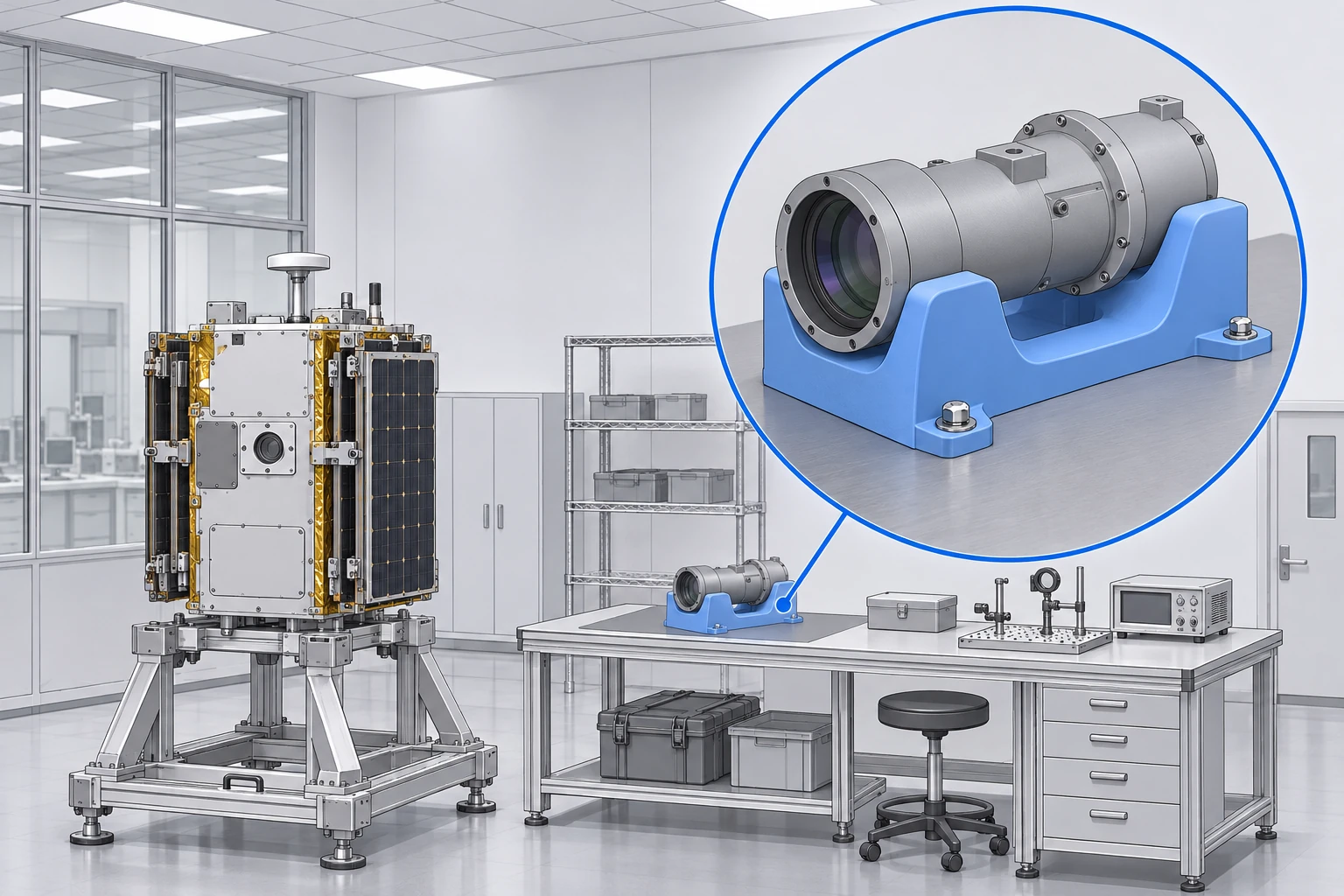
Turn a packaging study, assembly challenge or test-equipment concept into a part your team can evaluate. GAGAT AM provides in-house FDM and SLS polymer printing for space-sector development and ground-support projects, with practical material guidance and repeat manufacturing of accepted designs.
Illustrative application concept. The highlighted part shows where custom printing can help.
Space programmes need models to check packaging, tools to support assembly and custom interfaces for laboratory equipment. A printed component can make a connector easier to reach, give a part a stable place on the bench or let a team rehearse an installation before the final hardware is available.
Start with the question your team needs to answer. The illustrated bench cradle supports a cylindrical instrument during ground integration while leaving its ends accessible. A packaging model may instead represent the outside envelope and cable clearances. We help choose a manufacturing approach around that task and produce a first version for evaluation.
Produce packaging models, locating fixtures and instrument interfaces in a suitable FDM polymer. The material and build configuration follow the ground-support task and its environment.
Explore FDM productionConsider PA12 for complex nylon housings or assembly aids without attached supports. Include cleaning, contact-surface and handling requirements in the first-part brief.
Explore SLS productionPrint representative geometry to check interfaces, cable access and assembly sequences. A model can help teams review how equipment fits together before the final hardware is available. Identify which dimensions must be representative and where simplified geometry is acceptable. The result should support a clear engineering decision, rather than merely resemble the eventual assembly.
Possible grade: PETG. Consider for ambient packaging models and installation trials.
Shaped nests and positioning aids can support components during laboratory or workshop tasks. Specify the intended contact points, loads and handling procedure. If the tool will touch sensitive hardware, discuss cleanliness and material compatibility requirements before manufacture. A well-defined fixture also leaves room for the operator, fasteners and inspection access.
Possible grade: PET-CF17. Consider for rigid ground-support tools after contact and cleanliness review.
Custom brackets, instrument housings, cable guides and adapters can connect existing laboratory equipment to a new test arrangement. Describe the actual test environment, including temperature and any vacuum or contamination constraints. Ordinary room-temperature workshop use and a specialised test chamber are different applications and should lead to separate suitability decisions.
Possible grade: PEEK. Consider only where the test environment justifies its specialist properties.
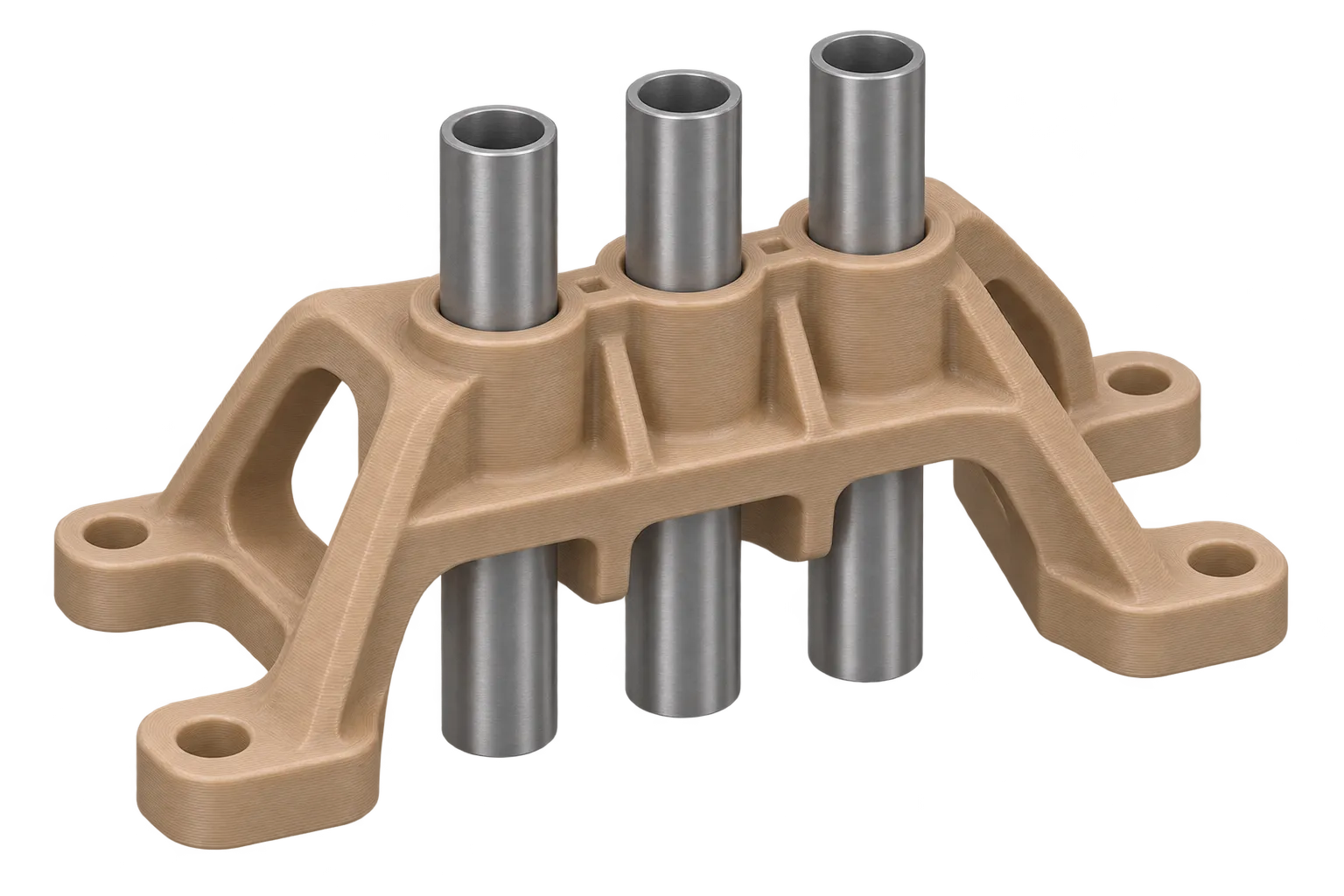
The illustrated guide keeps three probe tubes on separate paths, with accessible mounting feet and clearance below the part. It positions the tubes without implying a sealed connection or positive retention. Those functions need separate features if the test setup requires them.
Share the tube sizes, mounting interface and working environment so we can plan the bores and installation access. Identify cleanliness and contact requirements when the guide is used near sensitive hardware. A representative trial lets your team check alignment and clearances before repeating the setup. Ground-support tools and flight hardware have different acceptance routes, which we discuss at the start.
PEEK is a candidate when heat or chemical exposure justifies it; vacuum and flight suitability require separate evidence.
A ground-support part needs a clear relationship with the equipment around it. Mark locating surfaces, fastener interfaces and the clearances that control assembly. Explain whether it supports a load, guides a probe or simply represents an envelope. An open cradle supports the instrument from below; add a defined restraint if the task could lift, roll or move it.
The instrument enclosure shows another practical set of interfaces: external base fixings, supported lid pillars, internal board supports and flat cable-entry seats. Check how the electronics enter the housing and leave room for gland nuts, connectors and the installation tool. A separate lid and the selected hardware complete the assembly. We review orientation, supports and finishing around those details, then agree the first-build checks for the laboratory setup.
Explore the printing guide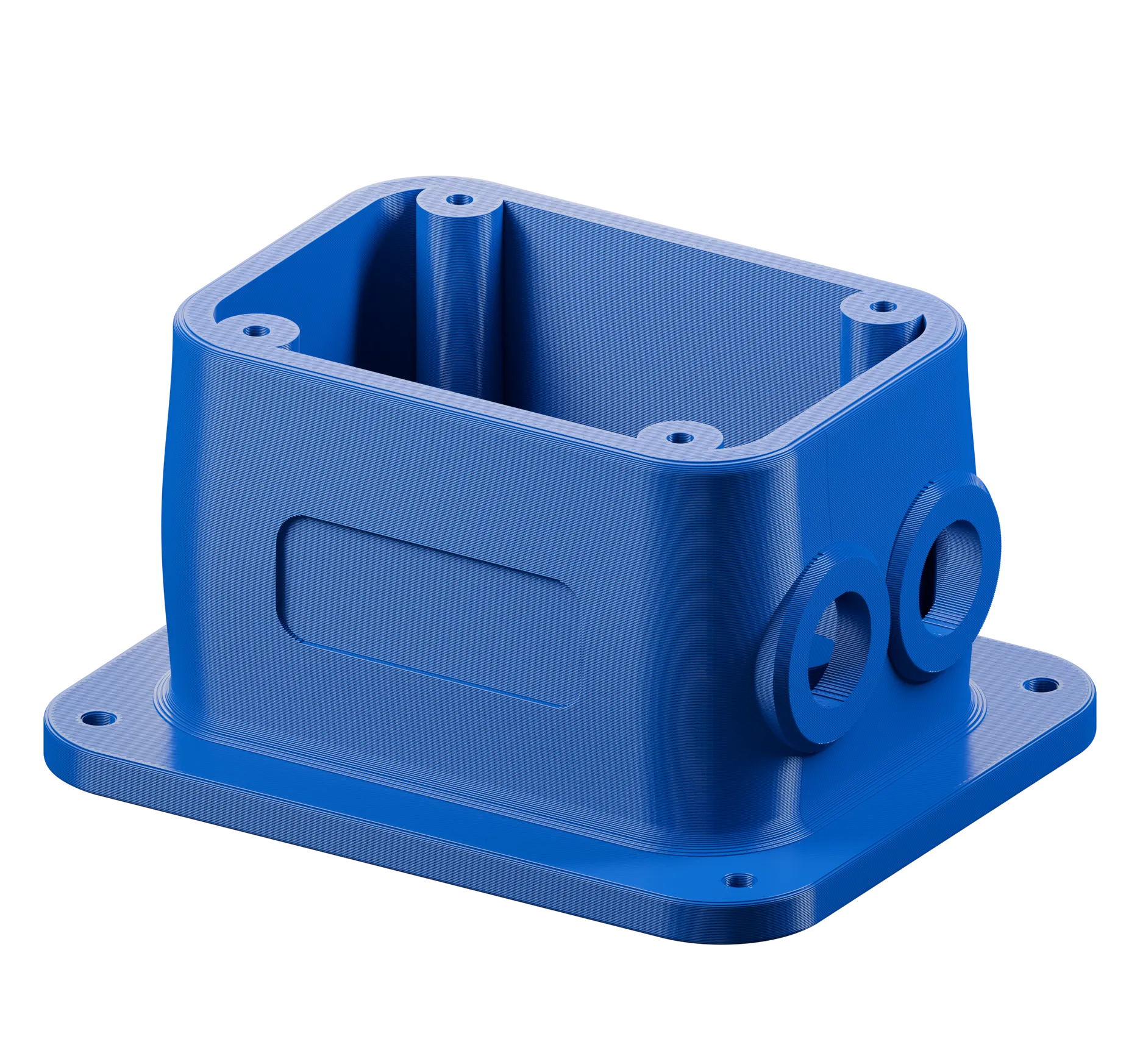
Send the model, revision, quantity and the question the part should answer. State the environment, important interfaces and any material or handling restrictions relevant to the proposed use.
Agree the process, grade, finishing and available documentation. Try the part in the intended setup and record fit, handling and any changes needed before acceptance.
Retain the confirmed model and manufacturing reference for further orders. Reassess the part if its role changes from a model to a working fixture or to a more demanding environment.
A useful assembly aid may be needed by several teams or again during a later build. Give it a clear reference and revision so the next person can find the right tool. Through Digital Inventory, approved items can retain the source model, material, applicable print configuration, finishing choices and agreed price during their validity period.
Order available approved parts through the customer portal, with the same in-house production partner preparing the next batch. When an instrument interface or test arrangement changes, review the saved item before ordering it again. The library supports repeat purchasing alongside your programme's configuration control and acceptance process; it does not replace them.
Explore Digital InventoryLink the support item to the instrument interface and accepted ground-use model, so a similar-looking variant is not substituted.
Record probe access, cable clearance, restraint and handling checks from the representative setup.
Confirm that the instrument interface and test environment still match before reordering the support item.
No blanket flight approval is claimed. This service page focuses on development, tooling and ground-support work. Any proposed flight use requires a separate assessment of the applicable material, process, component and programme requirements before a manufacturing commitment.
That cannot be established from its temperature rating alone. The exact grade, processing history, outgassing and contamination requirements matter. Provide the intended environment and acceptance criteria so the available evidence and any testing needs can be reviewed.
Yes. Explain which interfaces and dimensions the model must represent and what the review should establish. We can discuss an appropriate printing route for that stage, then quote a revised version when the design or evaluation requirements change.
Include CAD, the supported component's relevant interfaces, working loads, quantity and handling sequence. Identify sensitive contact surfaces, cleaning expectations and important fits. If there are specialised environmental or documentation requirements, supply them before selecting a material or agreeing production.
Tell us what the part needs to do, how many you need and which requirements matter. We will help assess the manufacturing route and prepare a quotation for the agreed scope.