
FDM production
Compare FDM materials for shape-check models, stiff fixtures and flexible contact parts. Match the build to the test or workshop task, then check the first sample with the workpiece.
Explore FDM production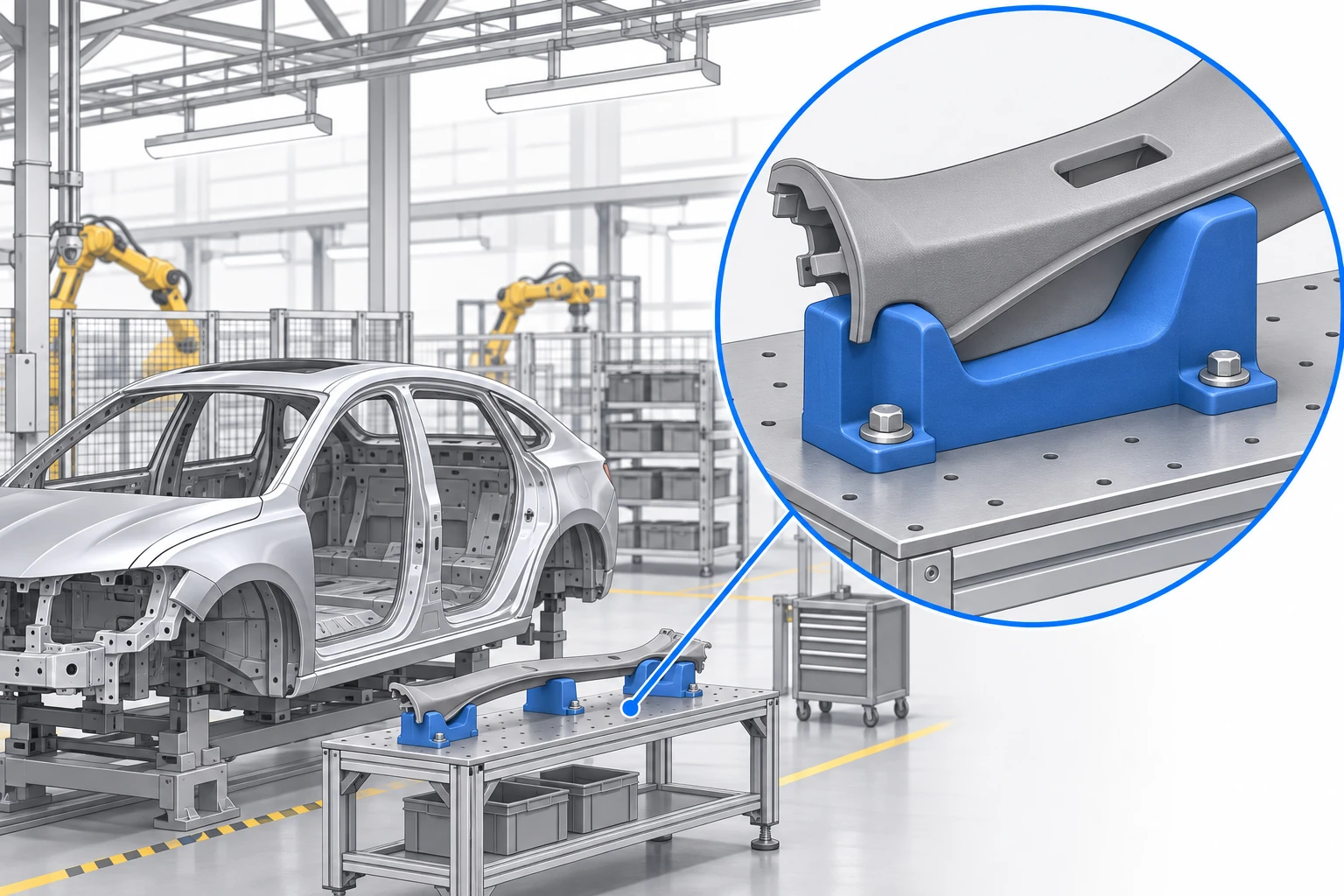
Check a new component, improve an assembly task or order a small batch of custom parts. Work directly with GAGAT AM's in-house FDM and SLS team to choose the material, try the first version and keep the useful design ready for repeat production.
Illustrative application concept. The highlighted part shows where custom printing can help.
A physical prototype can answer questions that remain difficult to settle on screen. Can the connector be reached? Does the cover clear the adjacent assembly? Can an operator position the component comfortably? Printing a representative part lets your team check these details before committing to a larger production step.
The same manufacturing route can also support useful tooling and selected low-volume components. We help connect the intended job to a material and print configuration, rather than treating every model as the same type of order. Tell us whether the part is for presentation, a workshop operation or an installed application, and what would make it successful in that setting.
Compare FDM materials for shape-check models, stiff fixtures and flexible contact parts. Match the build to the test or workshop task, then check the first sample with the workpiece.
Explore FDM productionConsider PA12 for complex housings, clips and integration prototypes. SLS avoids attached supports, helping with intricate shapes; we still plan powder removal and the required mating fits.
Explore SLS productionPrint housings, brackets, adapters and duct concepts to assess the space around a vehicle assembly. Include the neighbouring geometry or a drawing when clearances are important. A fit-check model can prioritize shape and access; a part intended for functional testing needs a material and construction chosen around the actual load and environment.
Possible grade: PA12. Consider for intricate housings and fit-check assemblies.
Shaped nests, setting aids and component holders can support repetitive workshop or production tasks. Define the locating faces, the direction of load and how the operator inserts and removes the workpiece. Replaceable contact elements may be useful where wear or marking matters. We help plan the printed body and its connections around the agreed task.
Possible grade: PPA-CF. Consider for rigid fixtures with demanding mechanical or thermal needs.
Small-batch covers, cable guides and equipment adapters can address a specific installation or retrofit. These parts are considered individually, including exposure to heat, sunlight, fluids and repeated handling. Supply the intended location and acceptance requirements so we can assess suitability without assuming that a prototype-grade material is appropriate for vehicle service.
Possible grade: ASA. Consider for covers exposed to sunlight, with vehicle-service checks.
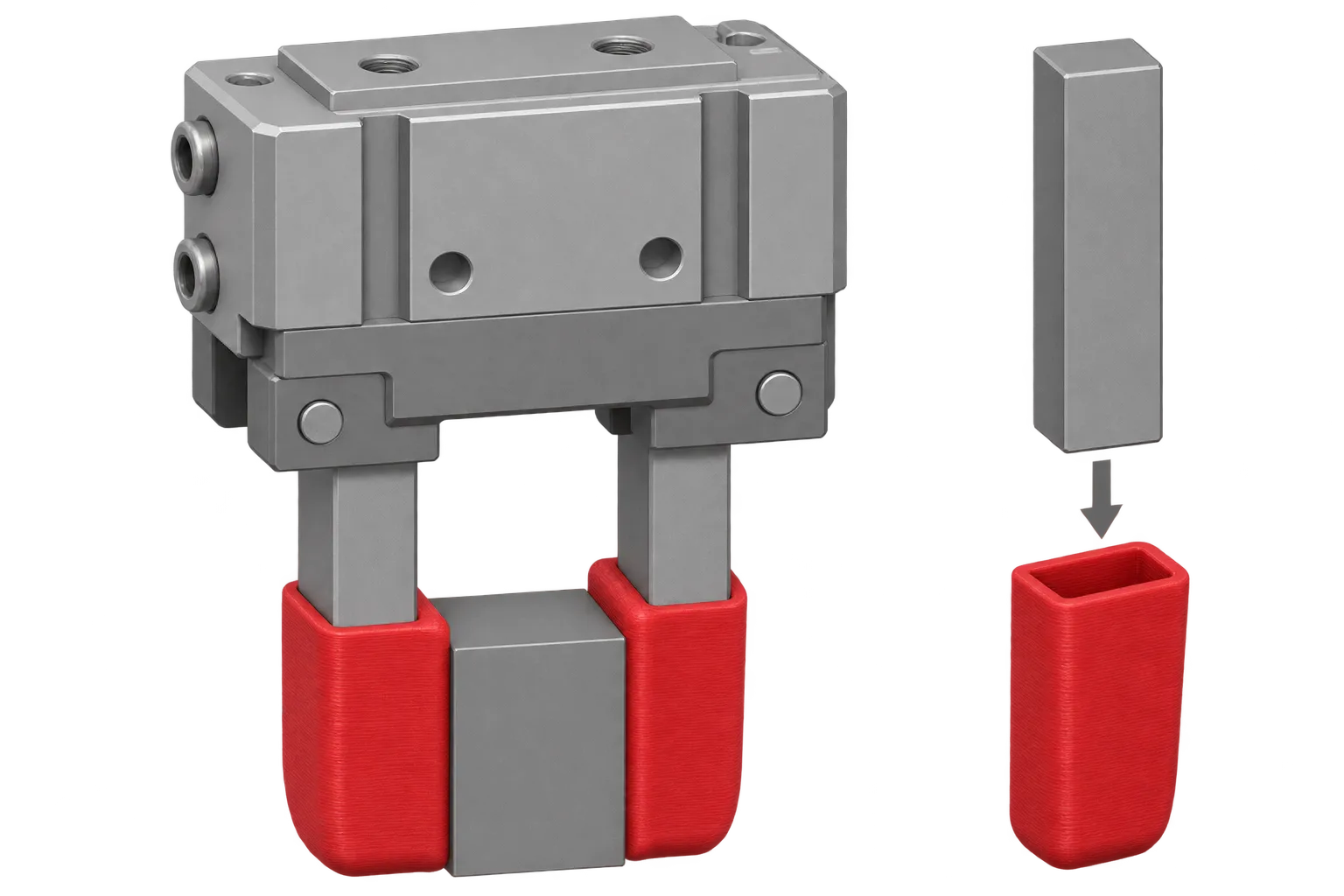
A gripper works best when each component has a clear role. The rigid fingers carry the load, while replaceable sleeves provide a compliant contact surface around the workpiece. Design the sleeve opening and retention around how the part enters, moves and leaves the tool.
Tell us what the tool handles, how much force it applies and which surfaces must remain unmarked. We help plan the contact geometry and print direction, then use representative sleeves to check fit, compression and surface marking with your actual component. Worn contact elements can be replaced without remaking the whole fixture.
The illustrated sleeves are a use case for TPU 95A; their grip and compression depend on the geometry.
The locating fixture supports a stepped workpiece in shaped seats, with an end stop to establish its position. It is an open nest, so the workpiece can be lifted out from above. If the operation involves cutting forces, transport or another load that could move the part, specify the separate clamping or retention arrangement. Leave access to the base fixings as well as the working area.
For an installed prototype, identify critical mating dimensions and fastener access before printing. We review orientation, supports and finishing around those features. Threads, inserts and joined sections need enough surrounding material and a practical assembly sequence. Use the first sample to check tool access, loading and unloading, not only the overall shape.
Explore the printing guide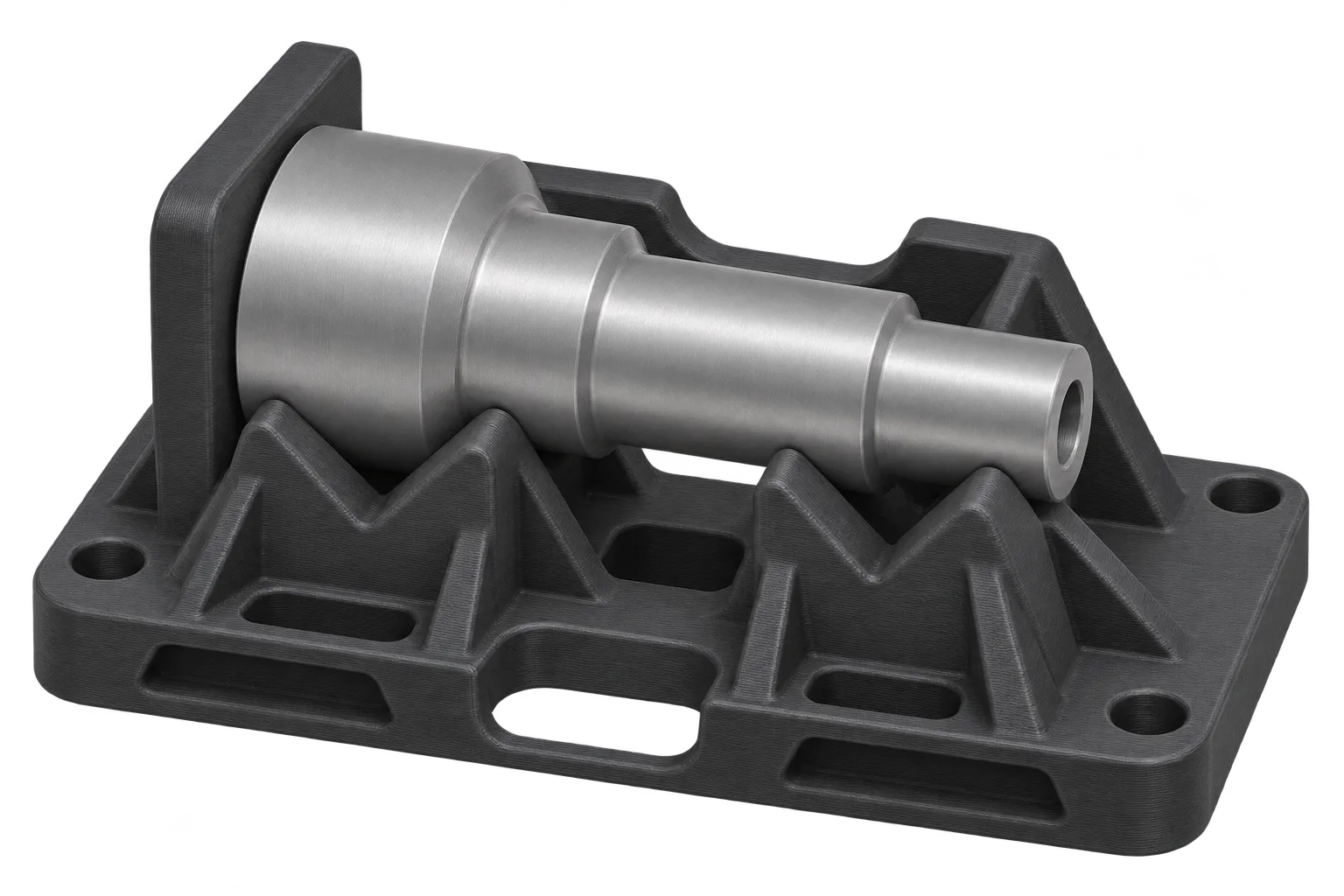
Send the model, revision and quantity, plus a short explanation of the assembly or workshop operation. Mark important fits and explain what the first part needs to demonstrate.
We help choose the process, material and finishing. Try representative parts with the mating hardware or workpiece, then record changes to geometry, handling or the manufacturing setup.
Once the part works for its agreed purpose, use that revision as the reference. Order the next batch with the required quantity and any checks identified during evaluation.
A useful fixture often becomes a recurring item as a line expands or a tool wears. Digital Inventory helps keep the accepted model, selected material, relevant print settings and finishing choices together. Clear names and references make the catalogue useful to purchasing as well as to the engineer who created the design.
Approved items can be reordered through the customer portal during their validity period, using the saved commercial agreement. If the vehicle assembly or tooling requirement changes, request a review of the part rather than silently substituting a new file. GAGAT AM remains the production contact as well as the keeper of the agreed manufacturing reference.
Explore Digital InventoryIdentify the workpiece face touched by the tool. Record the accepted pad shape and any marking found during the trial.
Keep the sleeve or contact pad identifiable separately from its rigid support, so worn contact parts can be reordered.
Check that the next workstation uses the same component and locating dimensions before ordering another fixture.
That depends on the component and its requirements. We assess the material, environment and design with you. A successful fit check does not establish road-use suitability, durability or any required approval. Define the intended application and validation plan before choosing a production route.
FDM offers a broad selection of polymers and can suit larger geometries. SLS PA12 is useful for intricate nylon parts without attached supports. We compare the options around size, geometry, finish, material needs and quantity rather than recommending one process for every model.
We can discuss a rigid printed body alongside suitable flexible TPU contact parts. The shape, compression, retention and working conditions need to be considered together. Try the contact arrangement with the real workpiece to check marking, movement and the handling needed by the operator.
Send CAD, quantities, key dimensions, intended material if known and the purpose of the part. Explain heat or fluid exposure and any required finishing. If the design is still evolving, identify the questions the prototype should answer so we can focus the first order.
Tell us what the part needs to do, how many you need and which requirements matter. We will help assess the manufacturing route and prepare a quotation for the agreed scope.