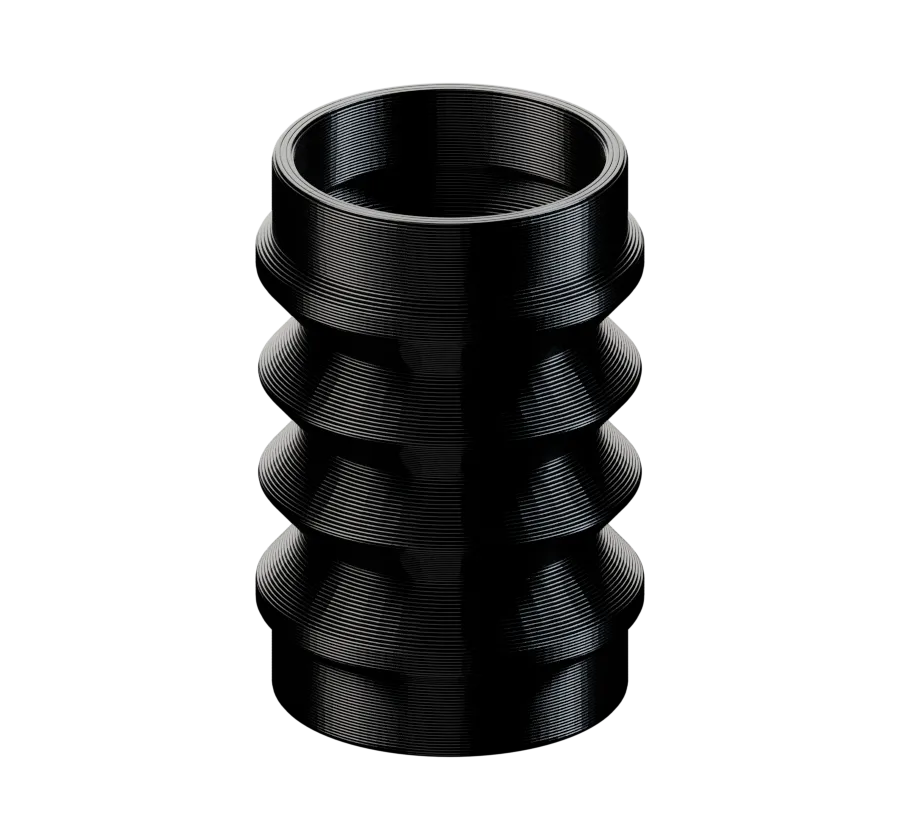
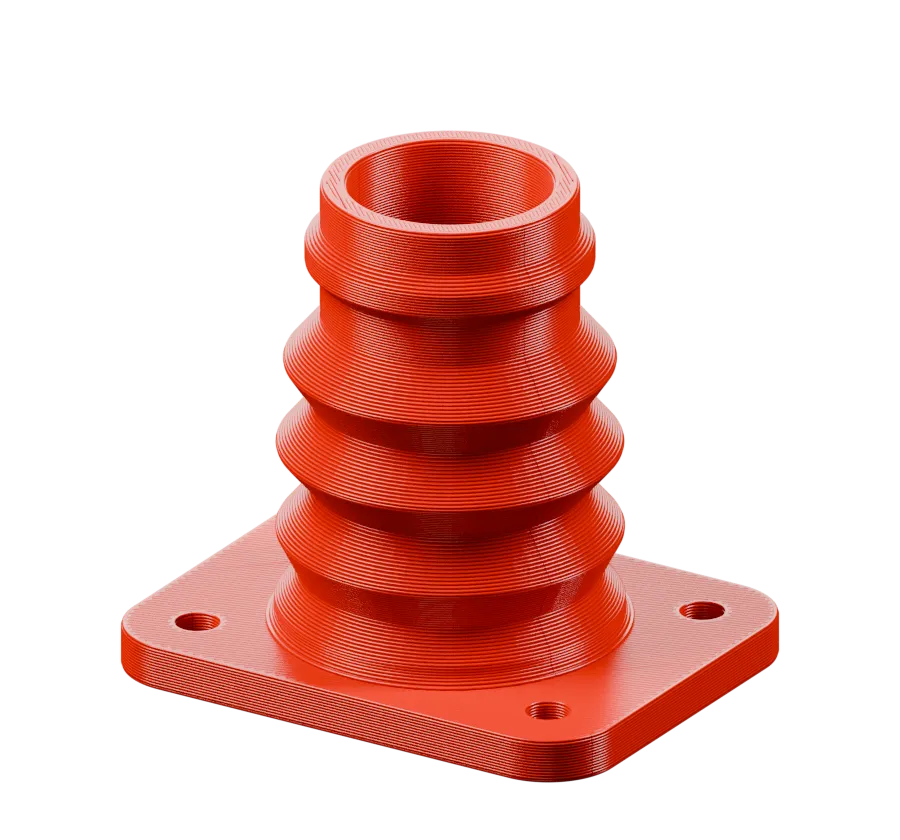
Red PolyFlex TPU95A panel cable boot with three flexible folds and a four-hole mounting flange.

Flexible TPU Materials

Parts that bend, grip and protect.

Create custom gripper pads, cushioning feet, protective boots and flexible covers with TPU 3D printing. We help tune the material and part structure around the movement, contact and feel you need.

  • Softer and firmer TPU options
  • Custom walls, folds and internal structure
  • Help from the first trial to repeat orders

Flexible TPU materials

Explore TPU for parts that bend, compress or grip. Choose a grade, or ask us to help create the feel and movement your component needs.

TPU 85A

BEDROCK 3D

A softer TPU option for cushioning, compliant contact pads and components that need to flex.

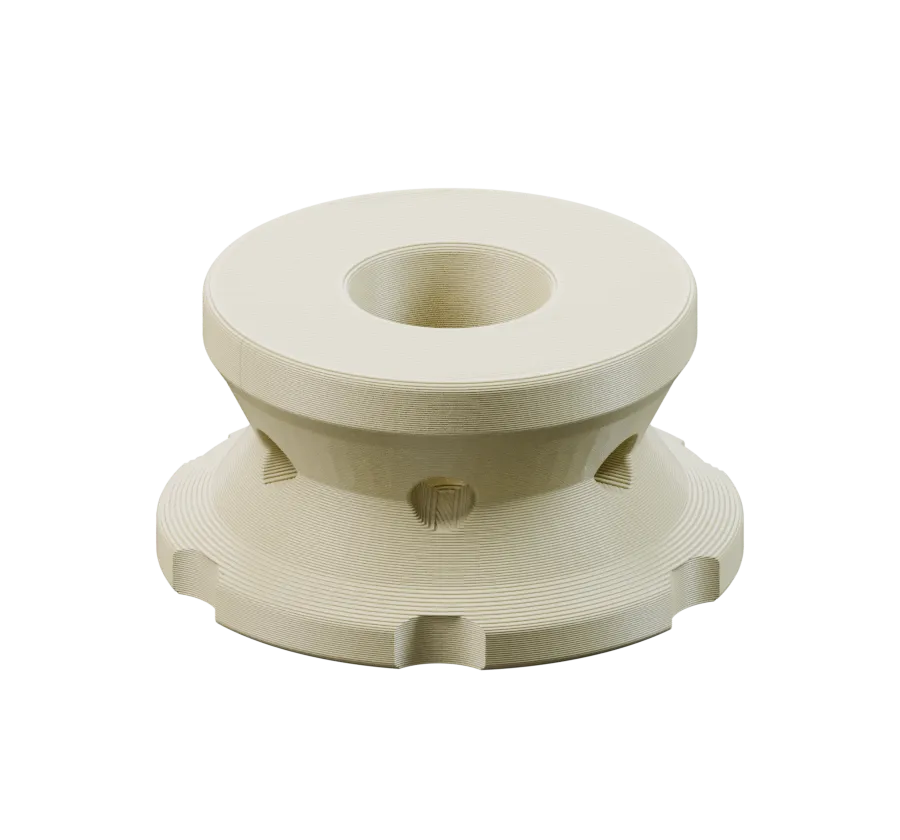
TPU 85A BEDROCK 3D render of Relieved cushioning foot · six flex windows, showing material texture and component geometry.View material →
TPU 95A

BEDROCK 3D

Flexible TPU for protective parts, custom pads and working prototypes that need to bend or compress.

TPU 95A BEDROCK 3D material renderView material →
TPU95A

Polymaker

Flexible TPU for custom cable boots, protective covers, gripper pads and parts that need to bend.

TPU95A PolyFlex material renderView material →

Not sure which material to choose? Tell us what your part needs to do. Our team can help, and each material page has the detailed properties.

DESIGN AROUND THE APPLICATION

Flexibility with a purpose.

See how flexible parts can cushion equipment, hold a workpiece or protect a moving connection. These concepts show what a custom shape can make possible.

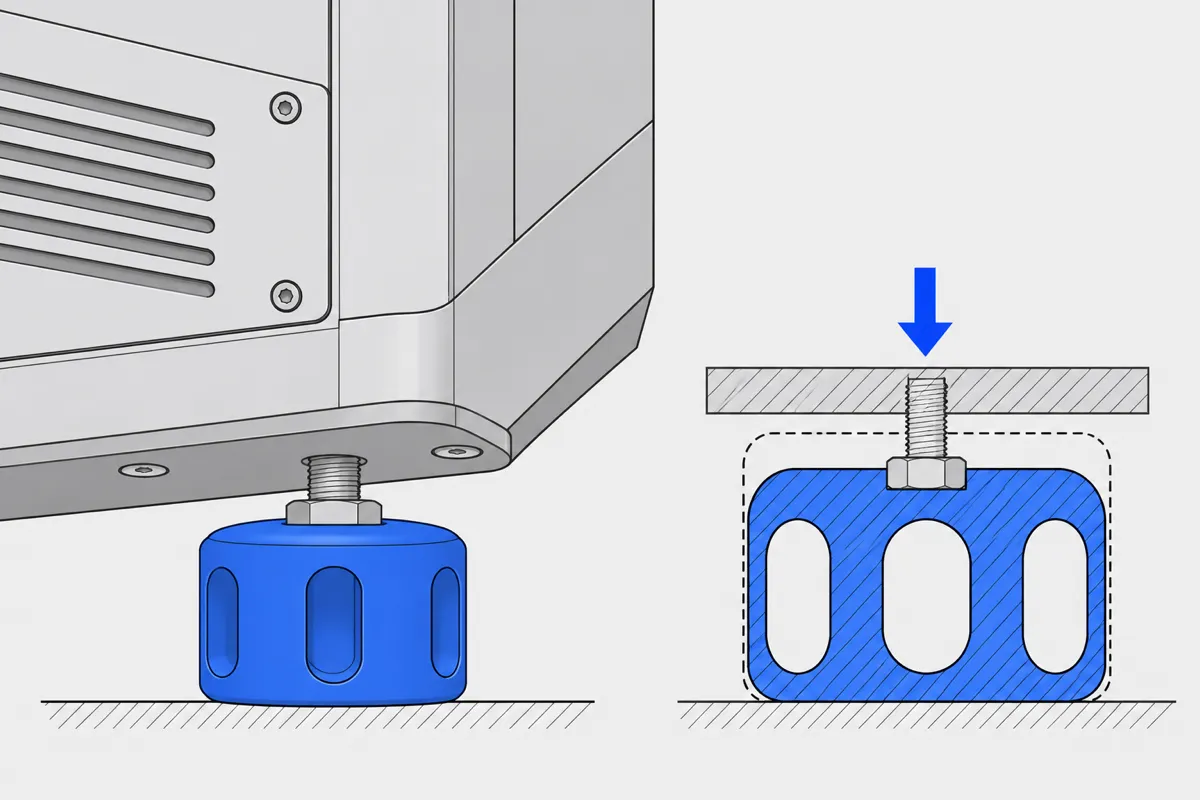
Technical illustration of a blue compliant equipment foot under a machine, with a sectional compression study.

CUSHIONING & CONTACT

Cushion the contact.

Custom TPU feet, bump stops and pads give equipment a flexible contact surface. Shape the part around the available space and the load it needs to carry.

HOW WE HELP

We help choose the contact area and internal structure, then discuss a first-part trial to check compression and recovery in use.

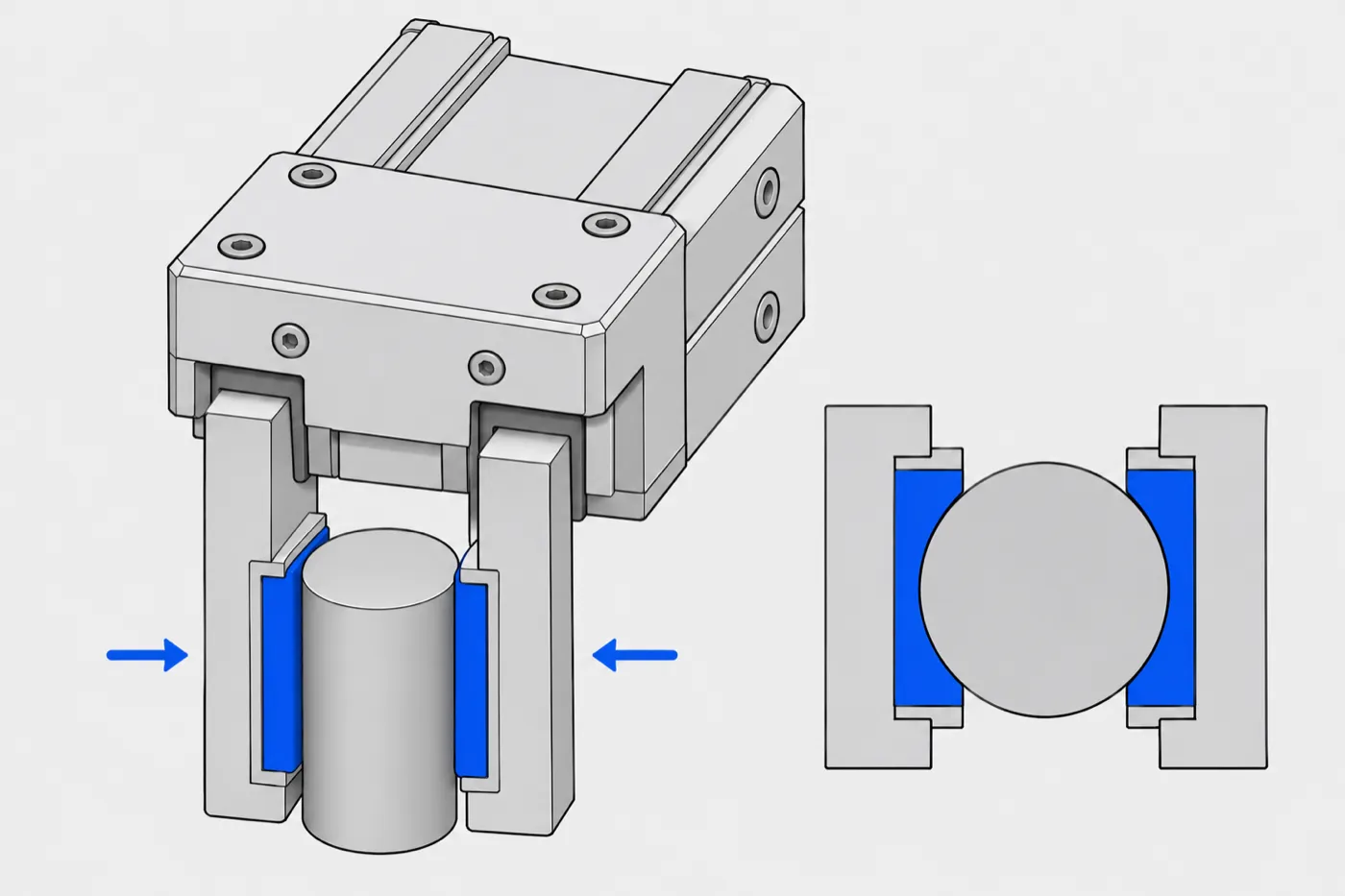
Parallel gripper with blue TPU pads curved around a vertical cylinder, with a matching top-view contact section.

GRIPPING & HANDLING

Shape the pad around the workpiece.

A replaceable TPU pad adds a flexible contact surface to a rigid gripper. A custom contour follows the workpiece, with an attachment designed around the gripper fingers.

HOW WE HELP

We help with the pad shape and attachment. Trying it on the actual workpiece lets you check grip, surface marking and wear before a larger order.

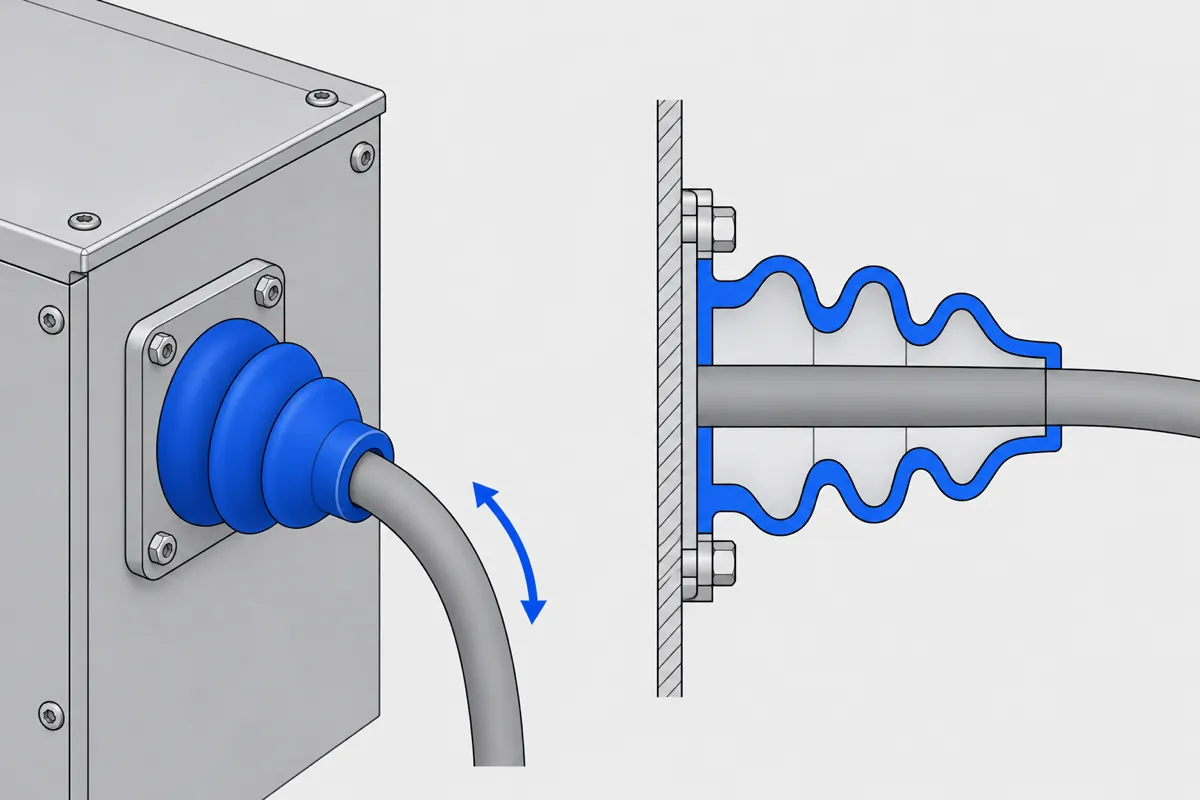
Technical illustration of a flexible blue cable boot mounted on an enclosure, with a longitudinal section showing the cable passage.

FLEXIBLE PROTECTION

Leave room for the movement.

Flexible cable boots, sleeves and covers protect connections while allowing movement. Folds give the part room to bend around the surrounding assembly.

HOW WE HELP

Our team helps with the folds, cable clearance and mounting flange. Tell us how the connection moves and whether it also needs to seal.

HARDNESS & PART RESPONSE

85A or 95A is the starting point.

Shore A describes material hardness. It does not tell you how much a finished part will bend or compress under your load.

85A

More give from a softer grade.

BEDROCK TPU 85A offers a softer starting point for cushioning and compliant contact parts. We help combine the material with a shape that suits the job.

Explore BEDROCK TPU 85A →

95A

Flexible parts with a firmer starting point.

Explore BEDROCK TPU 95A and PolyFlex TPU95A for protective parts, pads and flexible prototypes. Our team can help with grade and colour choices.

The shape matters as well as the material. A thin-walled part can feel very different from a solid one, even within the same hardness class.

MATERIAL HARDNESS ≠ PART STIFFNESS

The structure can change the feel more than the Shore number.

Shore A describes how hard the material is. The feel of a printed part also comes from its walls, infill and shape. Changing that construction can have a greater effect on bending or compression than a change in material hardness.

For example, a thin, lightly filled 95A part can be easier to deform than a thick, densely filled 85A part. We help choose the construction for the movement you need, rather than relying on the Shore number alone.

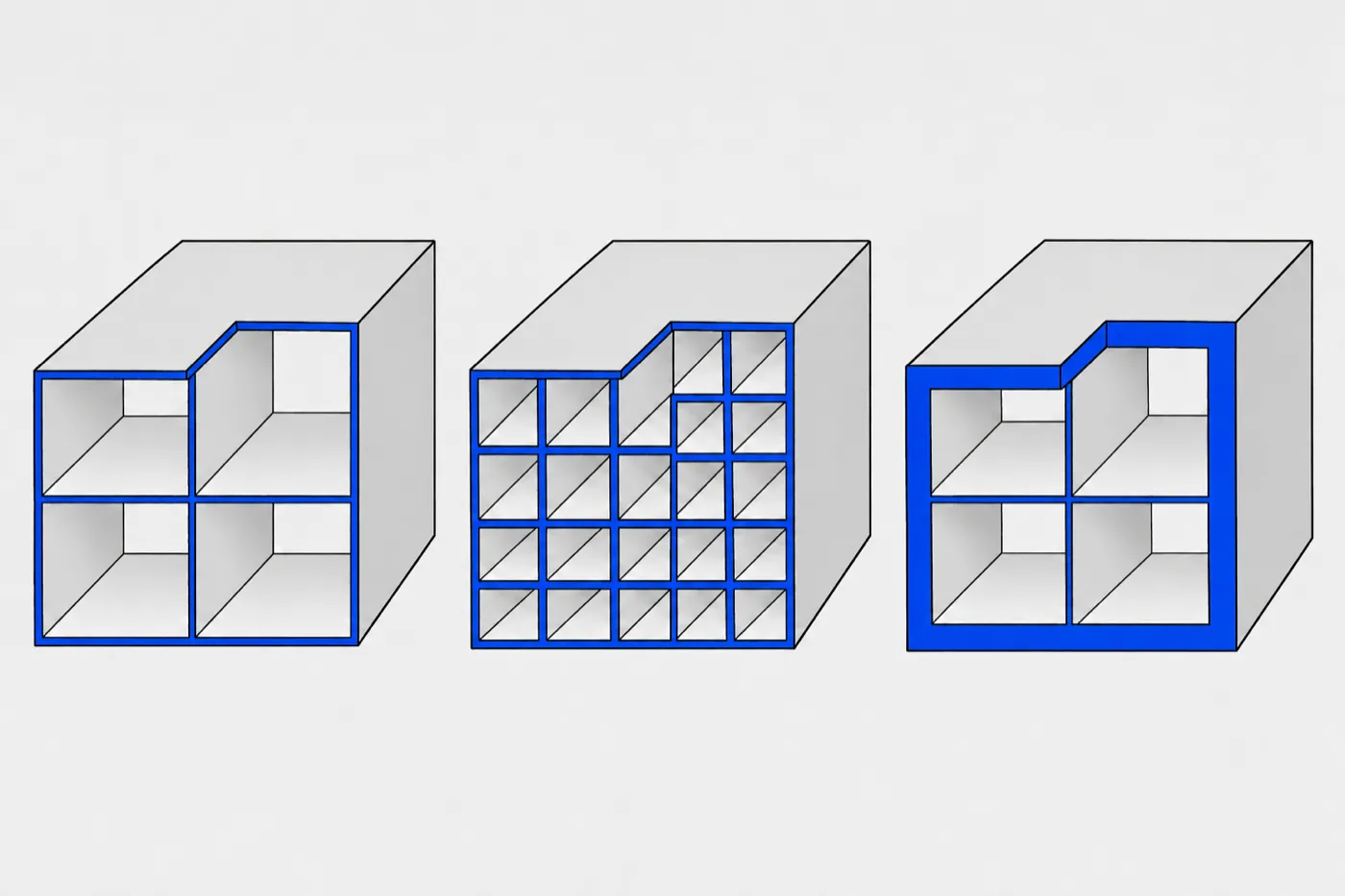
Three cutaway cushioning blocks in the same TPU grade: thin shell with open infill, thin shell with denser infill, and thicker shell with open infill.

01 · OPEN CORE

Thin shell and sparse infill leave more room for the structure to deform.

02 · DENSER CORE

The same shell with more internal material changes resistance to compression.

03 · THICKER SHELL

The same open core with thicker outer walls changes how the part carries load.

Same material and outer size, with different construction. These cutaways illustrate the design choices; they do not represent measured performance.

Walls and surface layers.

Thicker walls generally resist bending more. Side walls and solid top and bottom layers also form a shell around the infill. On a small or thin component, that shell can dominate the response, so changing infill alone may make little difference.

Our team can adjust the wall thickness and surface layers to help tune the response without changing the outside shape.

Infill density and pattern.

For the same shell and pattern, increasing infill usually increases resistance to compression. Pattern and orientation matter too: two parts with the same infill percentage can respond differently when loaded from different directions.

Infill percentage describes the internal fill setting, not the percentage of the whole part that is solid.

Shape and available movement.

Longer flexible sections, folds and reliefs can create movement while keeping the mounting area stable. We help leave room for that movement and avoid thin regions that are prone to tearing.

Load, time and recovery.

A cushioning foot and a moving cable boot work in different ways. We help consider time under load, recovery and repeated movement, as well as temperature, wear and contact with oils or cleaning agents.

LET’S TUNE THE RESPONSE

Tell us how the part should feel and move.

A softer pad, a firmer grip or a boot that bends more easily: start with the result you want. Show us what the part touches and how it will be used.

We can discuss a first-part trial and adjust the walls, infill or shape from what you learn. If you have a specific force or movement target, include it with your enquiry.

There is no universal conversion from infill percentage to Shore hardness. A hollow 95A print has a different structural response; it does not become an 85A material.

Explore walls and infill in the Printing Guide →

FIRST PART • FUNCTIONAL TRIAL • REPEAT ORDER

Agree the feel before the batch.

A first part lets you try the fit and feel in your assembly. We help refine the design or construction before the next order.

01

Show us the application.

Send the CAD or information you have, and explain what should bend, compress or grip. Include the surrounding components if they help show the fit.

02

Try the first part.

Check how it fits, moves and recovers in use. We can discuss changes to the shape, structure or material before a batch.

03

Reorder with the same reference.

We keep the accepted design, material and print setup as the reference for future orders.

Explore FDM production →

COMPLETE THE ASSEMBLY

A flexible part. A rigid support.

Pair a compliant pad, boot or sleeve with a stable housing, bracket or fixture.

TELL US ABOUT YOUR PART

Your part and the components it fits against

How it should bend, compress or grip

Where and how it will be used

Bring your flexible part into production.

Upload your CAD for a quote or tell us what you need to make. We will help choose the TPU and construction for your flexible part.