
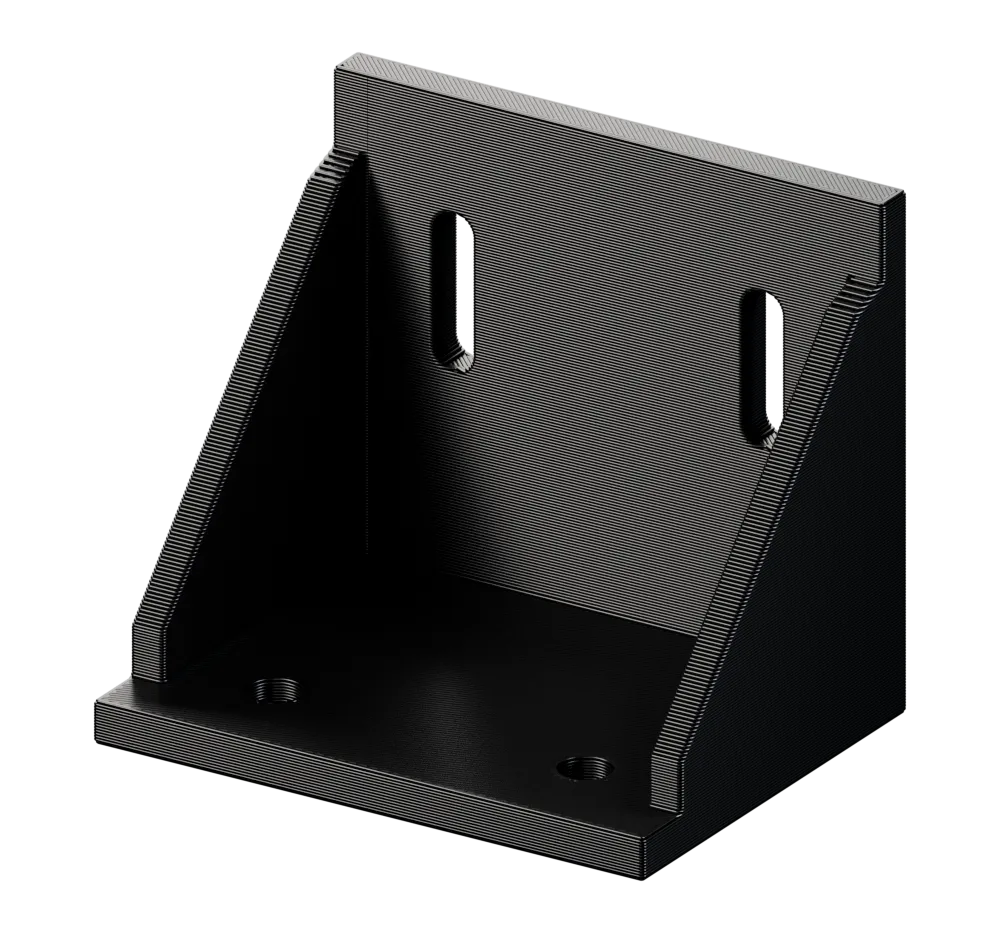

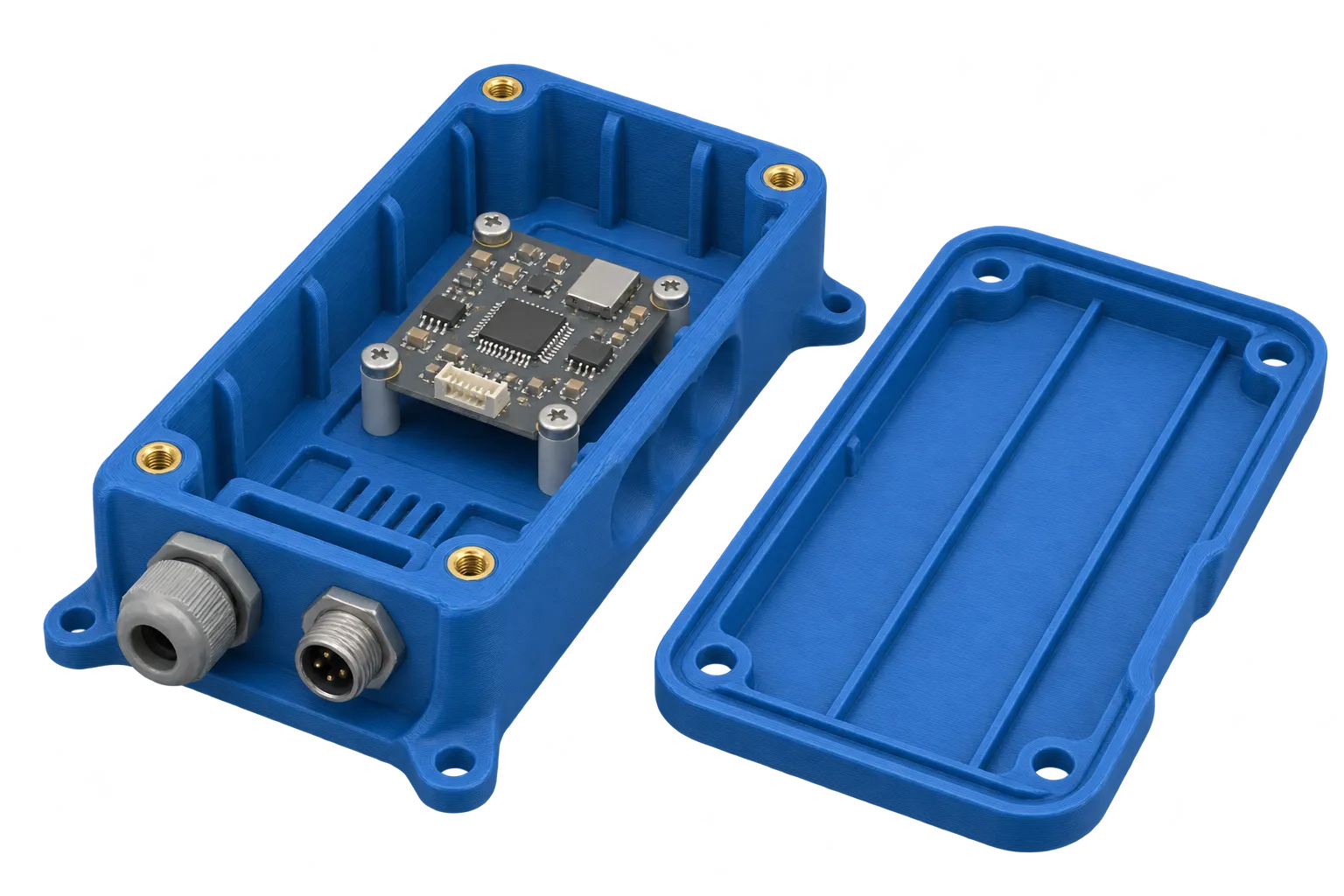
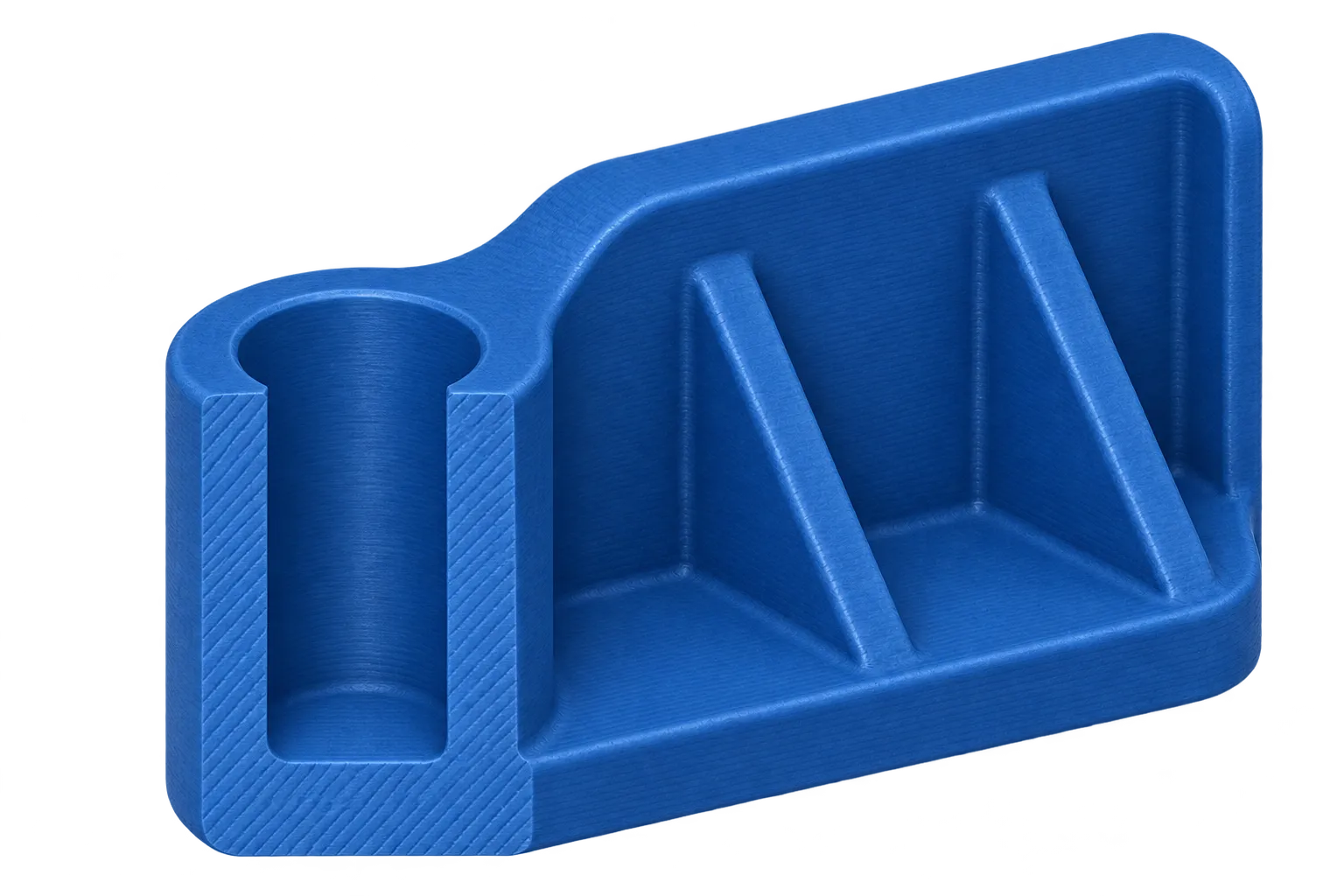
PC Polymaker material render of Adjustable optical sensor mount, showing the printed surface and component geometry.

PC

Make tough, rigid engineering parts in Polymaker PolyMax PC. Our in-house FDM service produces custom housings, brackets and fixtures, with help on fit, build direction and finishing.

✓
Tough engineering components
✓
Rigid housings and brackets
✓
Heat-resistant material option
✓
Help with fit and finishing
Technology

FDM

Post-processing
Tapping (internal threads)
Textured surface (fuzzy skin)
Heat-set threaded inserts
Colours

Polymaker

Material overview

PolyMax PC is Polymaker’s polycarbonate grade for demanding functional components. Its toughness and heat performance make it worth comparing when a part has outgrown an everyday prototyping material.

Why choose PC?

Typical projects include equipment housings, brackets and fixtures that need a rigid shape and durable handling. We plan the print and any stress-relief treatment around the geometry and final fit. For flame-performance requirements, choose a specifically documented flame-retardant grade rather than assuming all PC is equivalent.

Typical applications

Tough equipment housings

Protect components in a rigid enclosure designed around the installation.

Brackets and supports

Connect equipment with a custom mounting shape and accessible fixings.

Engineering prototypes

Evaluate a working part in a tougher polymer before repeat manufacture.

Blue FDM equipment housing with a separate lid, internal circuit board and accessible mounting bosses.

Protect the equipment and keep it serviceable.

A working equipment enclosure needs a rigid shell, supported fixing bosses and room to reach the internals. The illustrated housing makes those connections visible; PolyMax PC is a candidate when handling, impact or heat drives the material choice.

Best suited to

Tough functional housings, brackets and fixtures with more demanding service conditions.

What to consider

This PC grade does not automatically meet a specified flame classification. Build direction and any stress-relief treatment also matter to the final fit.

Make the first sample useful

Keep screws accessible and avoid concentrating loads in a thin unsupported boss. Mark the fit-critical faces for checks after the agreed production process.

Plan the connections as part of the print.

The cutaway shows how a fixing boss and ribs connect to the housing wall. Those details matter just as much as the outer shape when a lid or bracket has to stay in place.

Give fixings room

We review the material around holes and help choose a connection that suits the load and how often the part will be opened.

Choose the surfaces that matter

Tell us which faces are visible and where another component must fit. Build direction affects the layer pattern, support contact and local strength.

Keep the part practical to finish

Accessible supports and sensible internal clearances help turn the printed shape into an assembly-ready component. A printed enclosure is not automatically sealed or IP-rated.

Explore the Printing Guide →

CAD half-section of a blue housing corner showing a blind fixing boss, surrounding wall and reinforcing ribs.

Order your PolyMax PC part.

Send the design and quantity

Send the CAD, working temperature and load locations. Identify dimensions that must be checked after any agreed stress-relief treatment. No usable CAD yet? Send a drawing or photo to discuss the next step.

Compare price and plan delivery

Price depends on the size and geometry, quantity and selected finishing. Compare the available options online and tell us when you need the parts. We review custom requirements with you and confirm timing once the production brief is clear.

Agree the finish and fit

Available options include tapped internal threads, textured walls (fuzzy skin), heat-set threaded inserts, where the design allows. Printed parts retain a layer pattern. We plan important fits and visible surfaces around the build, and discuss further finishing where needed. Choose from the colours shown for this material when quoting.

Start with one part or a batch. We make the components in-house using FDM and retain the agreed production details for repeat orders.

Upload CAD & get a quote →   Discuss your part →

Technical properties

Manufacturer test data helps compare grades. Printed-part performance also depends on the design and print direction. Our team can help interpret the values for your application.

Source: PolyMax PC manufacturer technical data. PolyMax PC properties are reported for conditioned printed specimens and by print direction. The manufacturer’s stress-relief guidance is a processing recommendation, not proof that every supplied component has been annealed. Heat-deflection temperature is a test under a stated load, not a continuous service-temperature rating. We help interpret the values for your component.

Tensile strength

X-Y: 59.7 ± 1.8 MPa; Z: 29.1 ± 4.1 MPa (ISO 527, GB/T 1040)

Tensile modulus

X-Y: 2048 ± 66 MPa; Z: 1845 ± 35 MPa (ISO 527, GB/T 1040)

Elongation at break

X-Y: 12.24 ± 1.44%; Z: 1.84 ± 0.14% (ISO 527, GB/T 1040)

Heat deflection temperature

99.3 °C at 1.8 MPa; 114.1 °C at 0.45 MPa (ISO 75)

Density

1.19 g/cm³ at 23 °C (ISO1183, GB/T1033)

Compare PC with other materials.

Compare ABS for ordinary working housings. Choose a specifically documented PC-FR grade when flame performance is required, or a reinforced polymer when fixture stiffness leads.

ABS

For tough everyday housings with a different cost and performance balance.

PC-FR V0

For a PC grade with documented flame and railway results.

PA12-CF10

For stiff reinforced-nylon fixtures and mounting parts.

PolyMax PC 3D printing questions.

Is PolyMax PC flame retardant?

Do not assume a flame rating from the PC name. If your project needs a specified flame classification, compare DuraPro PC-FR V0 or PC/ABS FR and let us review the requirement with you.

Will a PC part be transparent?

A transparent base polymer does not make an FDM component optically clear. Colour, layers and surface texture affect the result; we discuss appearance using the actual available grade and finish.

Does PolyMax PC need annealing?

The manufacturer recommends stress-relief treatment for some uses. We decide the production approach around the geometry and application, and consider dimensional change before final fit checks.

Upload your CAD and get a quote, or talk to our team about the application.