
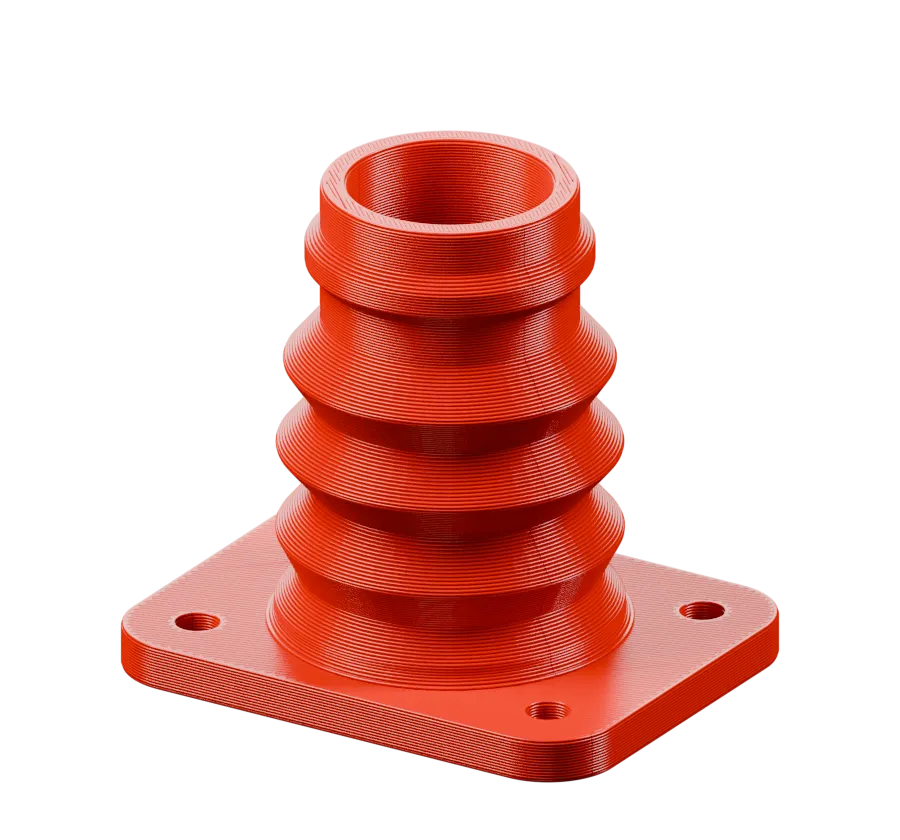

TPU95A PolyFlex material render of Panel cable boot · three flex folds, showing the printed surface and component geometry.

TPU95A

Print flexible boots, protective sleeves and custom contact pads in Polymaker PolyFlex TPU95A. We combine flexible material and practical part design to bend, cushion and fit around your assembly.

✓
Flexible parts that bend and compress
✓
Custom protection and contact surfaces
✓
Geometry controls the feel
✓
Shore 95A material hardness
Technology

FDM

Post-processing
Support removal
Colours

Polymaker

Material overview

Make a flexible component around your equipment instead of adapting a standard rubber shape. Polymaker PolyFlex TPU95A is a flexible polyurethane for parts that bend, compress or conform.

Why choose TPU95A?

Combine mounting features with folds, sleeves and shaped contact areas in one design. Use it for protective boots, replaceable pads and flexible covers around rigid equipment.

Shore 95A describes the material hardness. Walls, infill and shape determine how the finished part feels. We help choose the construction around the movement you need.

Typical applications

Cable boots and flexible covers

Protect a moving connection with a boot or sleeve shaped around your equipment.

Gripper pads

Add a flexible contact surface to a rigid gripper. We help check grip and surface marking with a first sample.

Feet, bump stops and protective pads

Cushion contact between components with a custom shape. We plan the load and movement with you, then check the response in use.

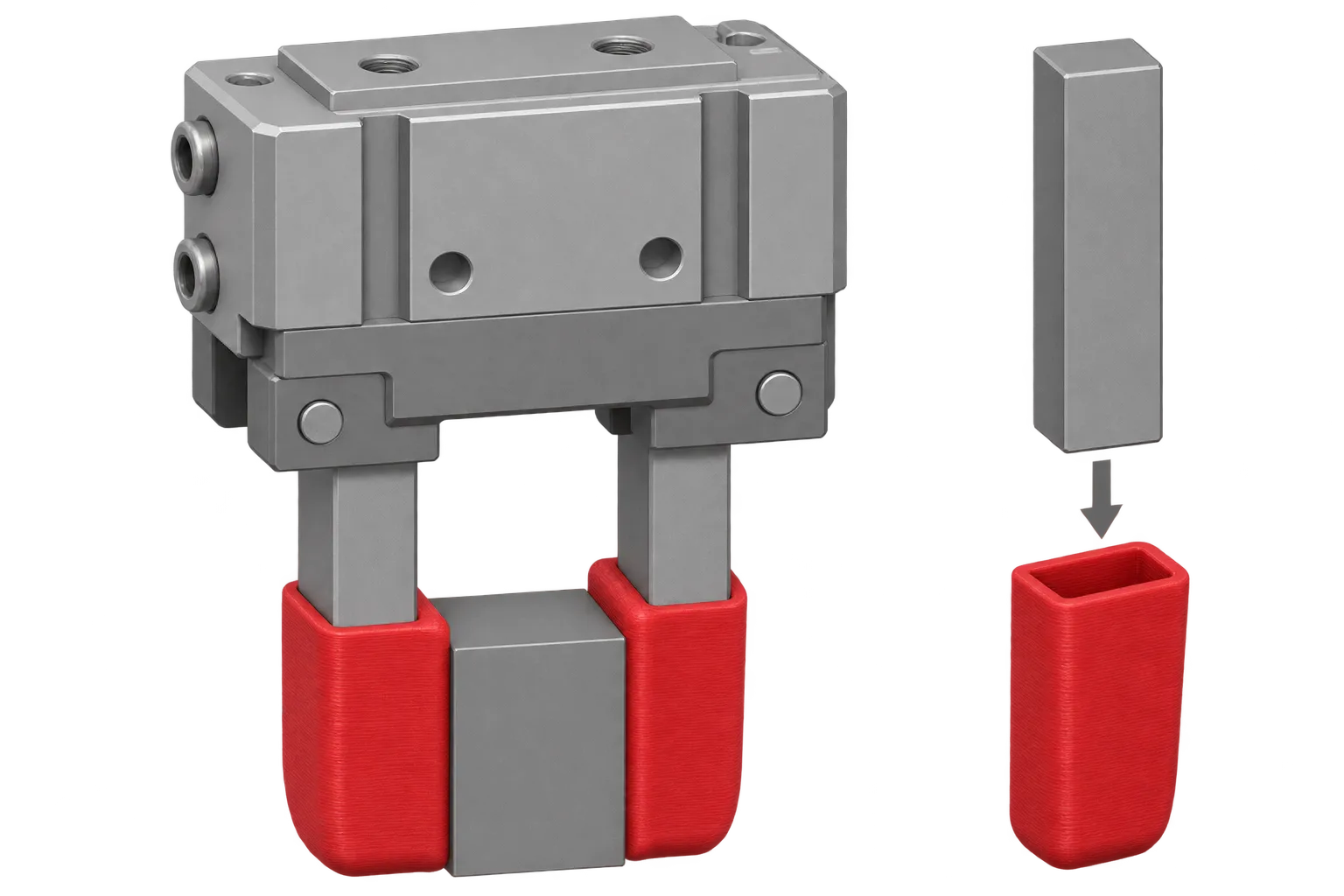
Red TPU sleeves on opposing rigid gripper fingers, with a separate sleeve-to-finger attachment detail.

Give the gripper a replaceable contact surface.

In the illustrated concept, two TPU sleeves cover rigid fingers and touch opposite faces of the workpiece. A shaped socket retains each sleeve while keeping exposed fasteners away from the contact face.

Best suited to

Gripper sleeves, protective boots and shaped interfaces intended to bend or compress.

What to consider

Shore 95A describes the material hardness; walls, infill and shape determine the printed response. Grip and marking need a trial with the real workpiece.

Make the first sample useful

Match the contact face to the component and agree how the sleeve stays in place. Test holding, removal and recovery during the actual handling cycle.

Same material. Three ways to build it.

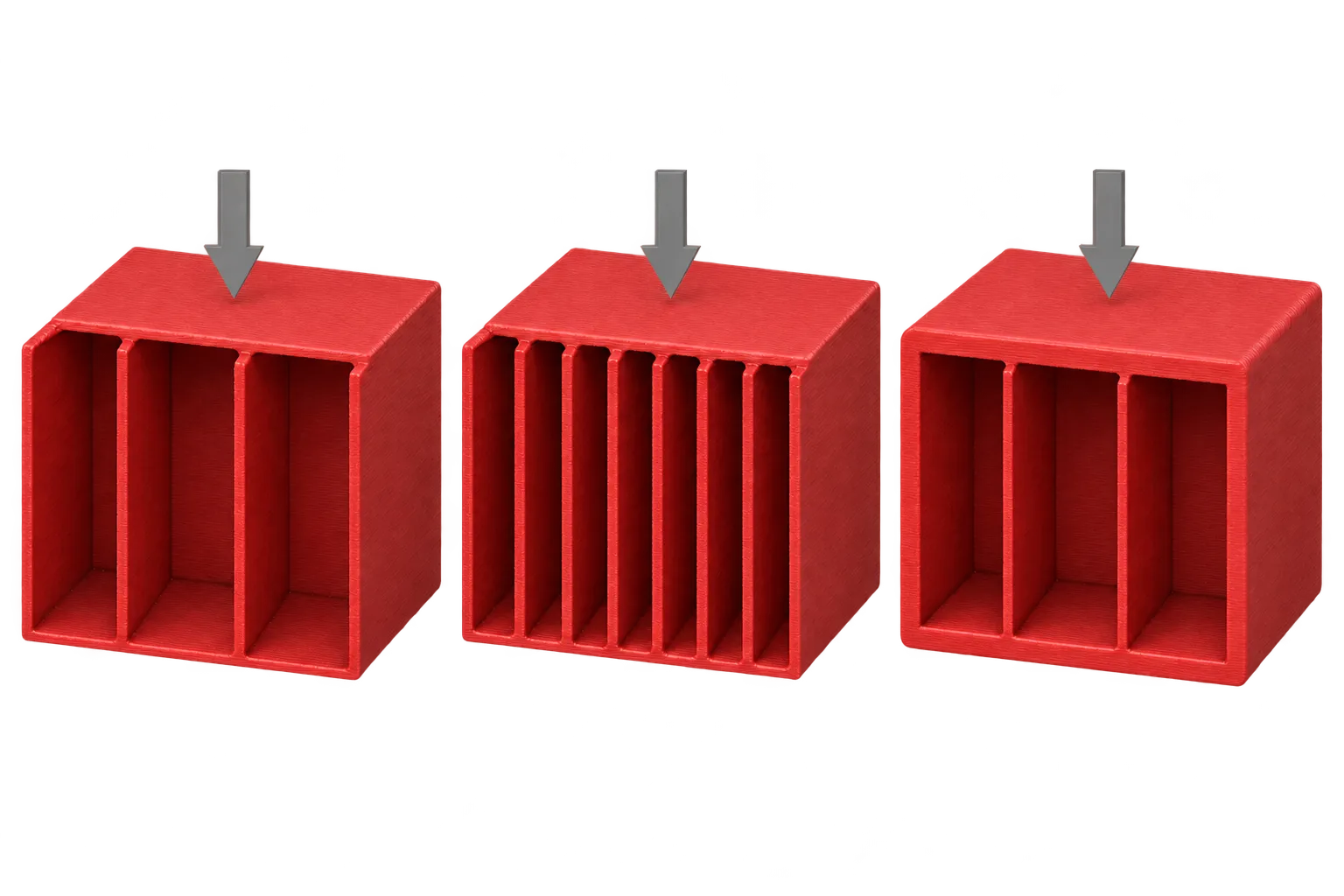
The cutaways keep the outside size and loading direction the same. Each comparison changes one construction feature.

01 · Open core

A thin shell and widely spaced internal webs provide a starting point for comparison.

02 · More internal support

The same shell with more closely spaced webs changes resistance to compression.

03 · Thicker shell

Thicker outer walls and surface layers change how the part carries the load. The internal webs keep the same thickness and spacing as the open-core example.

These simplified sections explain the principle, not measured force ratings or recommended print settings. Pattern and print direction matter too. We help compare a first sample, then retain the setup you choose.

Folds can add movement where it is needed, while mounting areas remain more substantial. FDM layers remain visible on the surface.

Explore walls, infill and flexibility →

Three red TPU cutaways with the same outside size: sparse internal webs, more closely spaced webs, and a thicker outer shell with the original thin webs.

Order your TPU95A part.

Send the design and quantity

Send the finger geometry, workpiece surface and holding load. Include the insertion route, retention method and the space available for sleeve deformation. No usable CAD yet? Send a drawing or photo to discuss the next step.

Compare price and plan delivery

Price depends on the part’s size and geometry, quantity and selected finishing. Compare the available options online; for a custom requirement, we review the design with you. Tell us when you need the parts. We confirm timing once the design and production requirements are clear.

Choose the finish and fit

Printed layers remain visible. We plan orientation and support removal around the surfaces that touch your equipment, and can start with a sample to check the feel. Colours shown on this page identify the available choices; select your preference when quoting. For a close fit, tell us what the part connects to so we can agree important dimensions and any finishing before production.

Start with one part or order a batch. We make it in-house using FDM printing, and keep the agreed production details for repeat orders.

Upload CAD & get a quote →   Discuss your part →

Technical properties

Manufacturer test data helps compare grades. Printed-part performance also depends on the design and print direction. Our team can help interpret the values for your application.

Material hardness: Shore 95A. Hardness describes the polymer; walls, infill and shape also affect how the part bends or compresses.

Source: Polymaker PolyFlex TPU95 TDS V5.1, linked above. The modulus and elongation shown here use this revision consistently. They are specimen results, not a prediction of movement in your component.

Tensile modulus

29 ± 2.8 MPa (X-Y; ISO 37, GB/T 528)

Elongation at break

330.1 ± 14% (X-Y; ISO 37, GB/T 528)

Density

1.20–1.24 g/cm³ at 23 °C (ISO1183, GB/T1033)

Compare TPU95A with other materials

Compare TPU 85A for a lower-hardness formulation or the other TPU 95A grade using its own data. Keep the supporting fingers rigid if they locate the workpiece.

TPU95A or TPU 85A?

BEDROCK 3D TPU 85A has a lower nominal material hardness. Compare it when a softer formulation may help, while considering the part structure and required movement together.

Two TPU 95A grades?

BEDROCK 3D TPU 95A and Polymaker PolyFlex TPU95A share a hardness class, but they are different formulations. We compare the exact grade, available colours and application rather than assuming equal performance.

Need a rigid mounting part?

A flexible pad or boot often works with a rigid bracket or housing. Explore engineering materials for the supporting component, or SLS PA12 for complex nylon geometry.

TPU95A 3D printing questions

How flexible is Shore 95A TPU?

It is a flexible polymer, but the part’s walls, infill and shape also determine how easily it bends or compresses. A thin-walled part can feel very different from a solid part in the same material.

Can you make it easier to bend without changing material?

Often, yes. Thinner flexible regions, folds or a more open core can help. We review the load with you and can compare samples before a batch. This changes the part’s stiffness, not its nominal Shore hardness.

Can TPU95A make a seal or gasket?

It can be considered for a specific design. Tell us about the fluid and pressure so we can review material compatibility, contact and the testing needed for a reliable seal.

Will TPU return to its original shape?

Recovery depends on the movement, temperature, time under load and repeated use. We help define a practical first trial for your foot, pad or boot.