
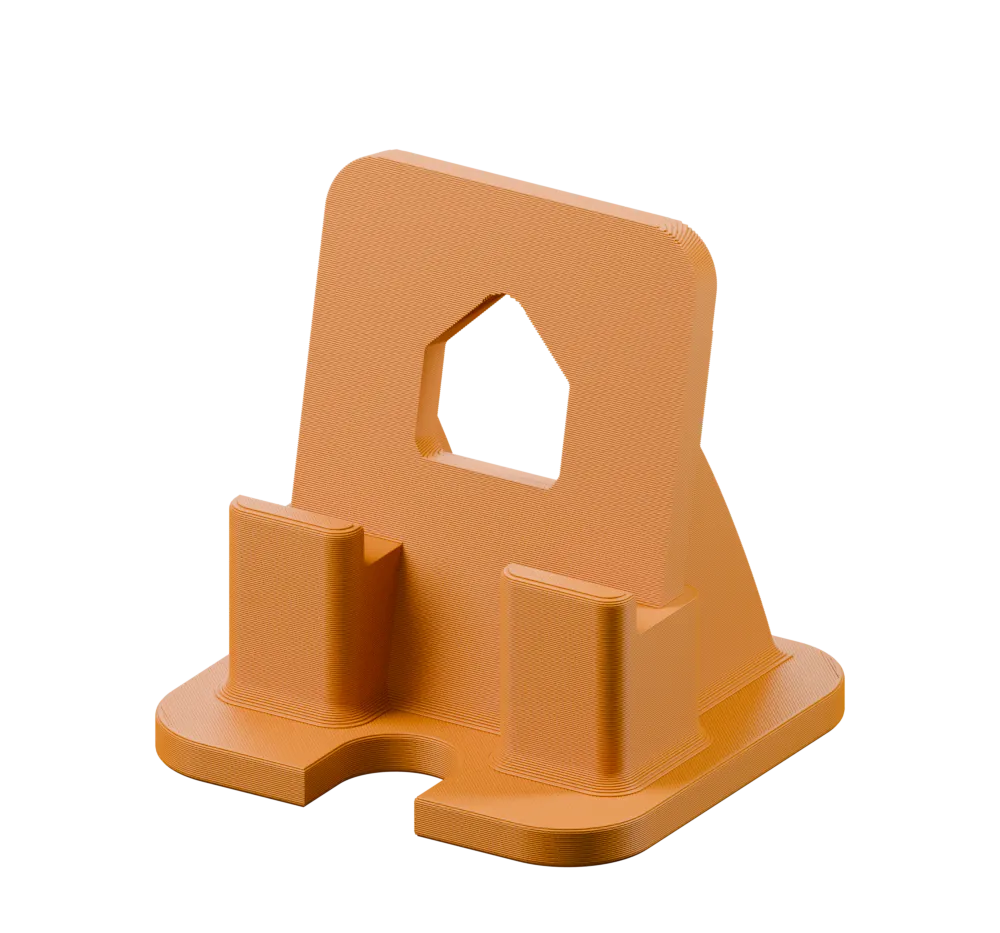

PLA Basic Bambu material render of Reclined phone stand · filleted roots, showing the printed surface and component geometry.

PLA Basic

Turn your design into a detailed physical model with Bambu Lab PLA Basic. Ideal for presentation models, assembly checks and early prototypes, with in-house FDM printing and a choice of colours.

✓
Detailed models and prototypes
✓
Rigid parts for assembly checks
✓
A choice of colours
✓
Optional top-surface smoothing
Technology

FDM

Post-processing
Tapping (internal threads)
Top-surface smoothing (ironing)
Textured surface (fuzzy skin)
Heat-set threaded inserts
Support removal
Colours

Bambu Lab

Material overview

See the shape, hold the design and check how the pieces come together. Bambu Lab PLA Basic is a rigid FDM material for detailed models, presentation parts and early assembly checks.

Why choose PLA Basic?

It is a practical way to resolve design questions before committing to a working part. Choose a colour for a presentation, test how components fit together, or make a model your team can handle.

We prepare the orientation and supports around the surfaces that matter. For hot equipment, outdoor use or repeated impact, explore the alternatives below.

Typical applications

Presentation and concept models

Show a product's form, proportions and key features to colleagues or customers. A model makes design discussions more concrete.

Fit-check prototypes

Check enclosure clearances, mounting positions and how separate pieces assemble before committing to the next version.

Display and demonstration parts

Make custom stands, mock-ups and demonstration components for indoor use where appearance and shape matter more than demanding service conditions.

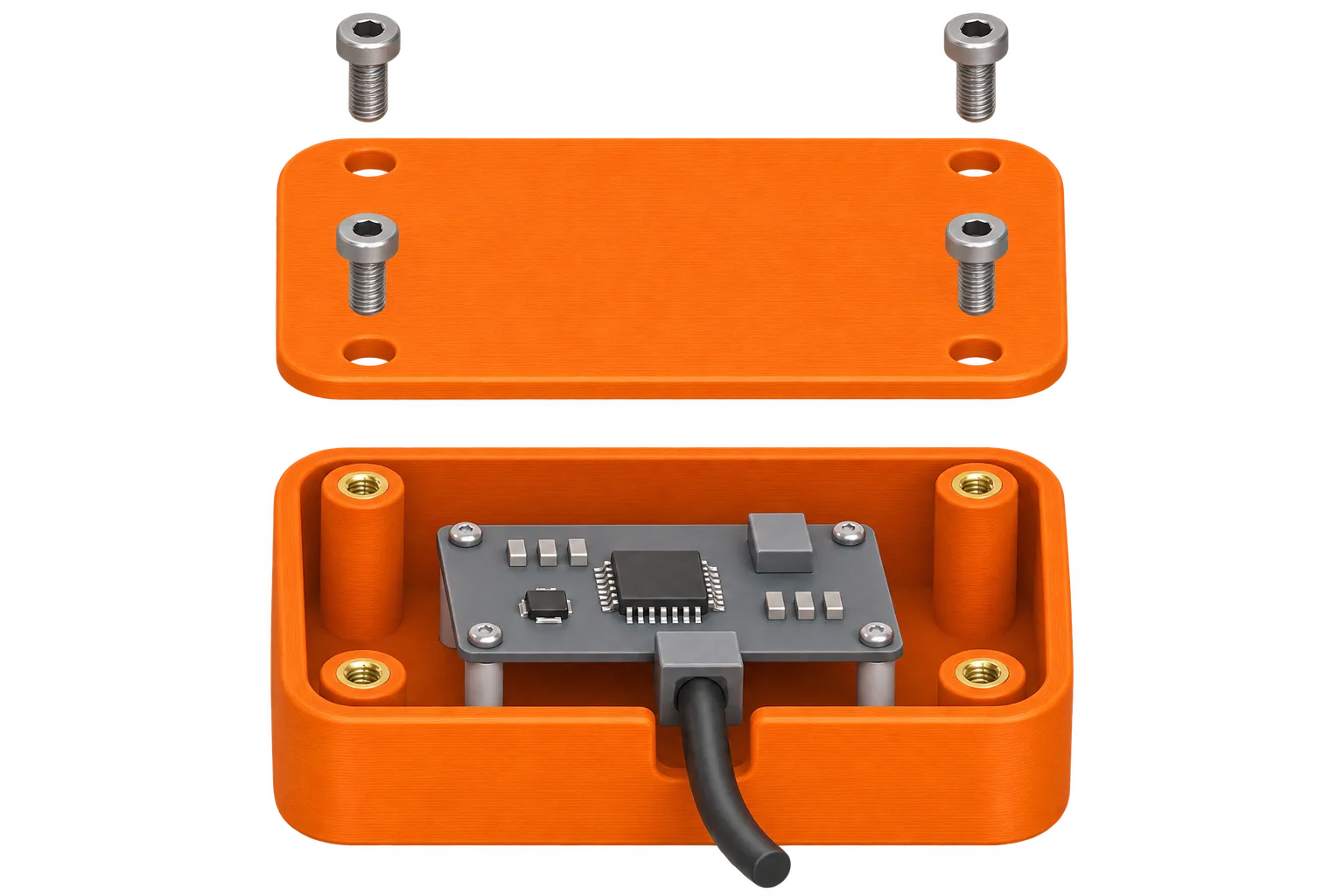
Exploded orange PLA enclosure with four lid screws, matching clearance holes and brass threaded inserts; the circuit board sits on separate standoffs.

Check the fit before you commit.

An enclosure prototype lets you check the board, lid and cable before committing to production. In the illustrated assembly, lid screws pass through clearance holes into threaded inserts; the board has separate supports and the cable has an open notch.

Best suited to

A rigid model for assembly reviews, presentation and early fit checks.

What to consider

A successful fit check does not establish suitability for heat, outdoor use or repeated impact.

Make the first sample useful

Check the board position, lid clearance and screwdriver access. Mark the visible faces and choose a colour before quoting.

Choose the surface your prototype needs.

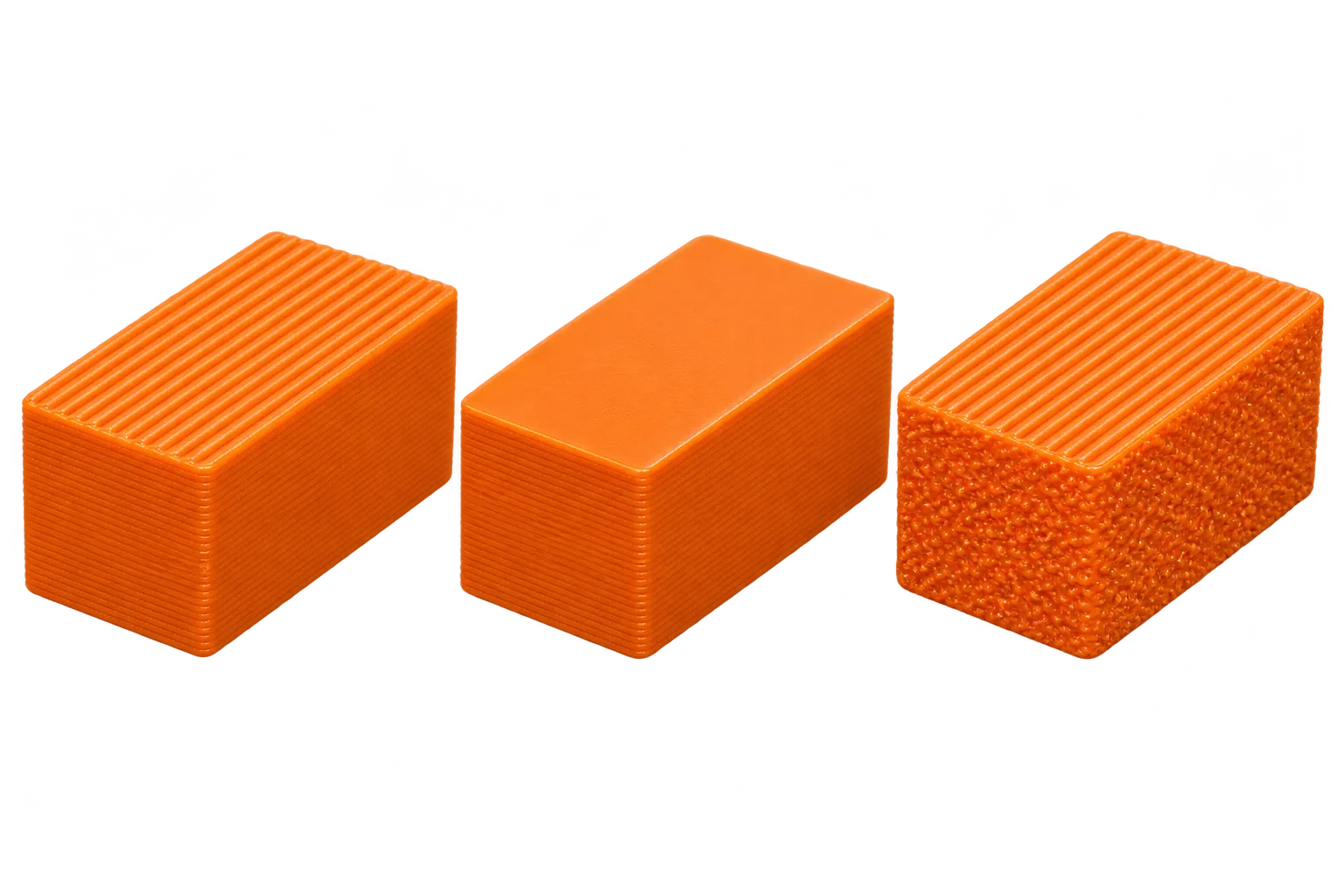
The same shape can have a different finish. The enlarged examples show the distinction from left to right; the texture is emphasised for clarity.

01 · Standard print

Visible top tracks and side-wall layer lines suit everyday models and fit checks.

02 · Ironed top

Top-surface smoothing (ironing) reduces texture on suitable flat top faces. The side walls retain their printed layers.

03 · Textured walls

Fuzzy skin adds a deliberately rough texture to suitable outer walls. It does not smooth the top. We keep close-fitting surfaces clear of the texture.

These illustrations explain the options; the result varies with the geometry and print setup.

Three orange PLA surface examples: standard printing, a smoother ironed top, and textured fuzzy-skin walls.

Order your PLA Basic part.

Send the design and quantity

Upload the enclosure CAD and identify the board envelope, cable exit and lid fit. Tell us whether the sample is for appearance, assembly or both. No usable CAD yet? Send a drawing or photo to discuss the next step.

Compare price and plan delivery

Price depends on the part’s size and geometry, quantity and selected finishing. Compare the available options online; for a custom requirement, we review the design with you. Tell us when you need the parts. We confirm timing once the design and production requirements are clear.

Choose the finish and fit

Standard parts retain visible print layers. Optional ironing, textured walls, tapped threads and heat-set inserts can be selected where the design allows. Colours shown on this page identify the available choices; select your preference when quoting. For a close fit, tell us what the part connects to so we can agree important dimensions and any finishing before production.

Start with one part or order a batch. We make it in-house using FDM printing, and keep the agreed production details for repeat orders.

Upload CAD & get a quote →   Discuss your part →

Technical properties

Manufacturer test data helps compare grades. Printed-part performance also depends on the design and print direction. Our team can help interpret the values for your application.

Source: Bambu Lab PLA Basic TDS V3.0, linked above. Test specimens were annealed/dried at 55 °C for 8 hours. X–Y and Z describe print directions. Heat-deflection results describe a test under load, not a continuous operating temperature.

Tensile strength

35 ± 4 MPa (X–Y); 31 ± 3 MPa (Z) — ISO 527 / GB/T 1040

Tensile modulus

2580 ± 220 MPa (X–Y); 2060 ± 170 MPa (Z) — ISO 527 / GB/T 1040

Elongation at break

12.2 ± 1.8% (X–Y); 7.5 ± 1.3% (Z) — ISO 527 / GB/T 1040

Heat deflection temperature

54 °C at 1.8 MPa; 57 °C at 0.45 MPa — ISO 75

Density

1.24 g/cm³ — ISO 1183

Compare PLA Basic with other materials

For a handled working prototype compare PETG; for outdoor exposure compare ASA. Choose SLS PA12 when complex nylon geometry is more important than a PLA presentation finish.

PLA Basic or PETG?

Choose PLA Basic for models and early fit checks. Compare Polymaker PETG when the part will see more everyday handling and you want a tougher functional option.

PLA Basic or ASA?

For a component that will live outdoors, explore ASA. We can help assess sunlight, temperature and the installation before selecting a grade.

PLA Basic or PA12?

Consider Formlabs PA12 for complex working nylon components. SLS uses surrounding powder to support the build, offering a different approach to intricate shapes and internal features.

PLA Basic 3D printing questions

Can I use PLA Basic for functional parts?

Yes, where the load and working conditions suit the material. It is especially useful for checking an assembly before choosing the final production grade. For sustained loads, heat or repeated impact, tell us about the application first.

Will the surface be completely smooth?

FDM parts have visible layer lines. Orientation and the chosen finish influence the appearance. Ironing improves suitable top surfaces, while fuzzy skin adds texture rather than removing it.

Is PLA Basic suitable for heat or outdoor use?

PLA Basic is best used for indoor models and applications with modest temperatures. It is not a flame-retardant grade. For hot equipment, prolonged outdoor exposure or a specified fire rating, we will help choose a different material.

Can I order one prototype before a batch?

Yes. Start with a part to check shape and fit, then order a revised version or more of the accepted design. This also gives you a physical reference for the finish.

What do you need to quote my PLA part?

Upload the CAD file and choose material, colour and quantity. Include a drawing or note for important fits, visible faces and any threads or inserts you need.

Have a CAD file ready? Upload your part and get a quote, or talk to our team about the application.