
FDM production
Compare rigid, reinforced and flexible polymers for support equipment and workshop tools. Choose around the loads, contact surfaces and first-part checks that matter to your team.
Explore FDM production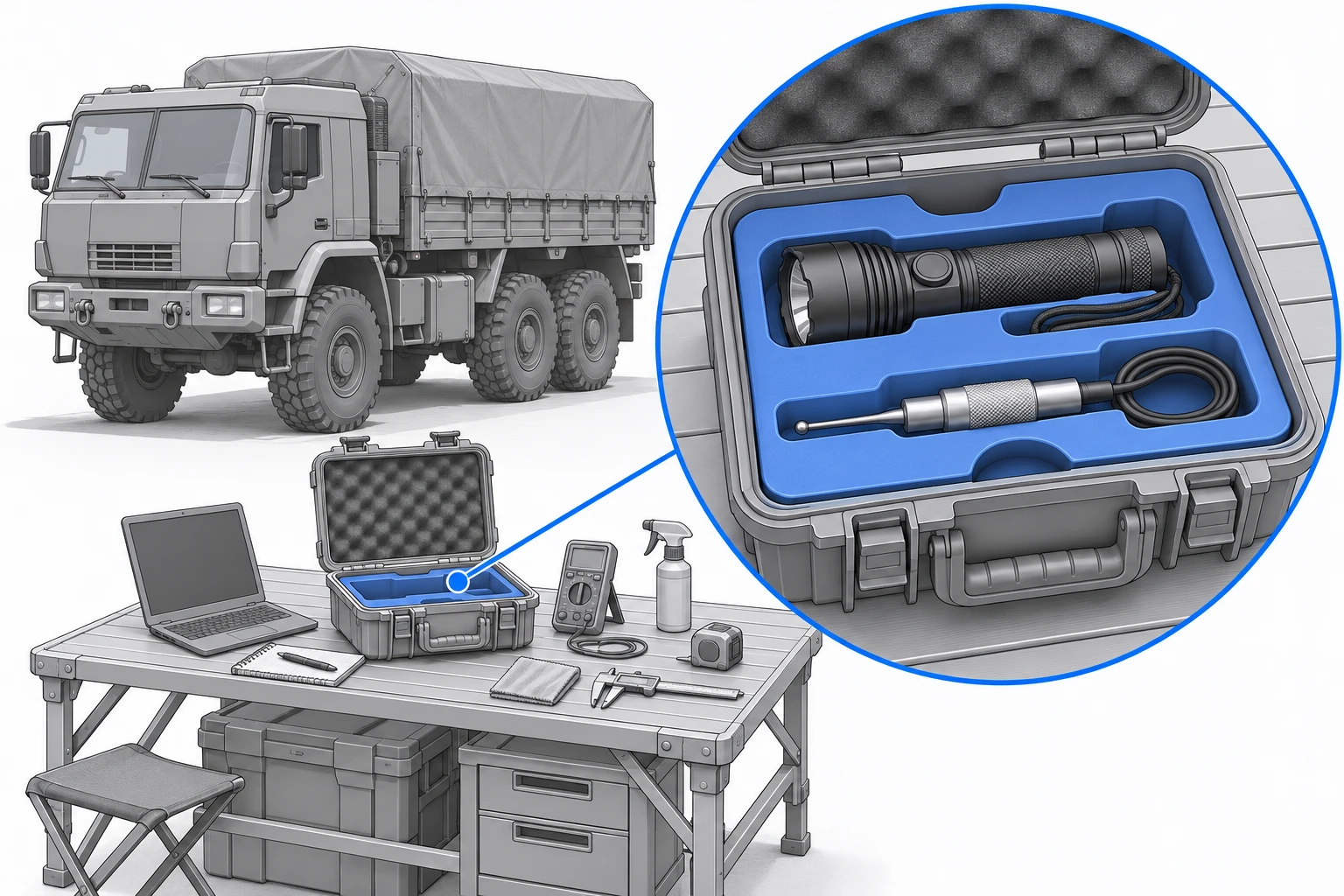
Turn an equipment interface or workshop improvement into a part your team can try. GAGAT AM provides in-house FDM and SLS printing for defence-sector development and support-equipment projects, with practical help on materials, assembly and repeat supply.
Illustrative application concept. The highlighted part shows where custom printing can help.
Equipment teams often need a small number of parts shaped around an existing assembly. A connector moves, a new instrument needs a mounting interface or a maintenance operation needs a better support. A printed first part can make the installation easier to evaluate and show where the design needs to change.
Work directly with our production team on the design and the job it needs to do. We help select the process and material, plan finishing and identify what to check on the first sample. Once the part works for its agreed purpose, keep that revision and manufacturing setup together for further orders. Start with the next practical workshop or integration problem.
Compare rigid, reinforced and flexible polymers for support equipment and workshop tools. Choose around the loads, contact surfaces and first-part checks that matter to your team.
Explore FDM productionUse PA12 for intricate nylon mounts, housings and equipment interfaces. We plan powder removal, finishing and the connections needed to fit the component into your assembly.
Explore SLS productionUse housings, mounting adapters and packaging models to evaluate how commercial electronics or instruments fit within a support assembly. Share the mating interfaces and explain which features must function during evaluation. A prototype can answer access and fit questions while keeping material qualification and final equipment acceptance as separate, explicit steps.
Possible grade: PA12. Consider for intricate instrument housings and integration prototypes.
Shaped supports, assembly nests and positioning aids can help teams work with repeat components. Define the contact surfaces, working loads and how the operator loads the part. We review the printed geometry and manufacturing approach around that use, including access for fasteners and any replaceable contact elements needed for maintenance.
Possible grade: PET-CF17. Consider for rigid workshop nests and positioning aids.
Custom trays, spacers, covers and compliant contact parts can be developed around equipment handled in a workshop or service setting. Tell us what is being supported, how it is moved and what environmental exposure is expected. Drop protection, sealing or transport performance should be assessed against the intended use rather than assumed from the appearance of the printed part.
Possible grade: TPU 95A. Consider for flexible contact interfaces, with handling trials.
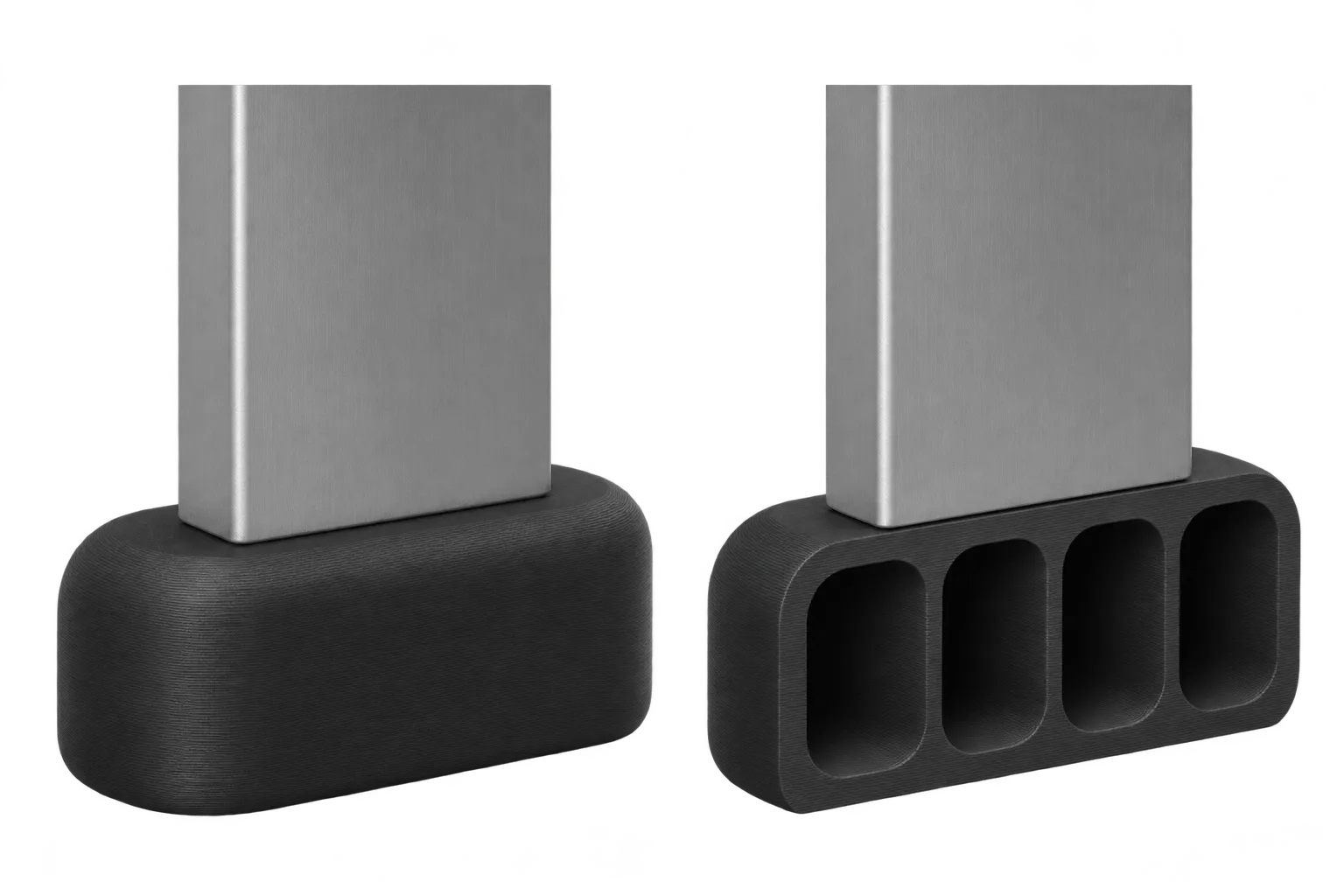
A replaceable equipment foot can follow the leg shape and provide a defined contact surface for handling or bench use. The section view shows internal spaces that allow deformation while keeping the fit around the rigid leg visible.
Send the supported mass, leg dimensions, contact surface and expected movement. We help prepare a representative part to check retention, compression and stability with the equipment. This makes the first trial useful: you can assess the connection and handling before ordering a set. If vibration isolation or drop protection is required, agree that performance and its testing separately.
TPU 95A is a candidate for the illustrated foot. Its shape and wall structure determine how it compresses.
The illustrated slotted sensor bracket allows vertical adjustment while its side ribs connect the upright to the mounting base. Check that the sensor's mounting pattern matches, the connector remains accessible and there is space to reach the base anchors. The printed bracket is one part of that assembly; screws and the mating structure must be defined too.
Mark the critical dimensions and provide the surrounding geometry where possible. We review build orientation, supports and finishing around the mounting and contact faces. Try representative parts with the intended hardware, check adjustment and tool access, then record the changes needed before repeat manufacture. This gives the next order a useful reference instead of another round of interpretation.
Explore the printing guide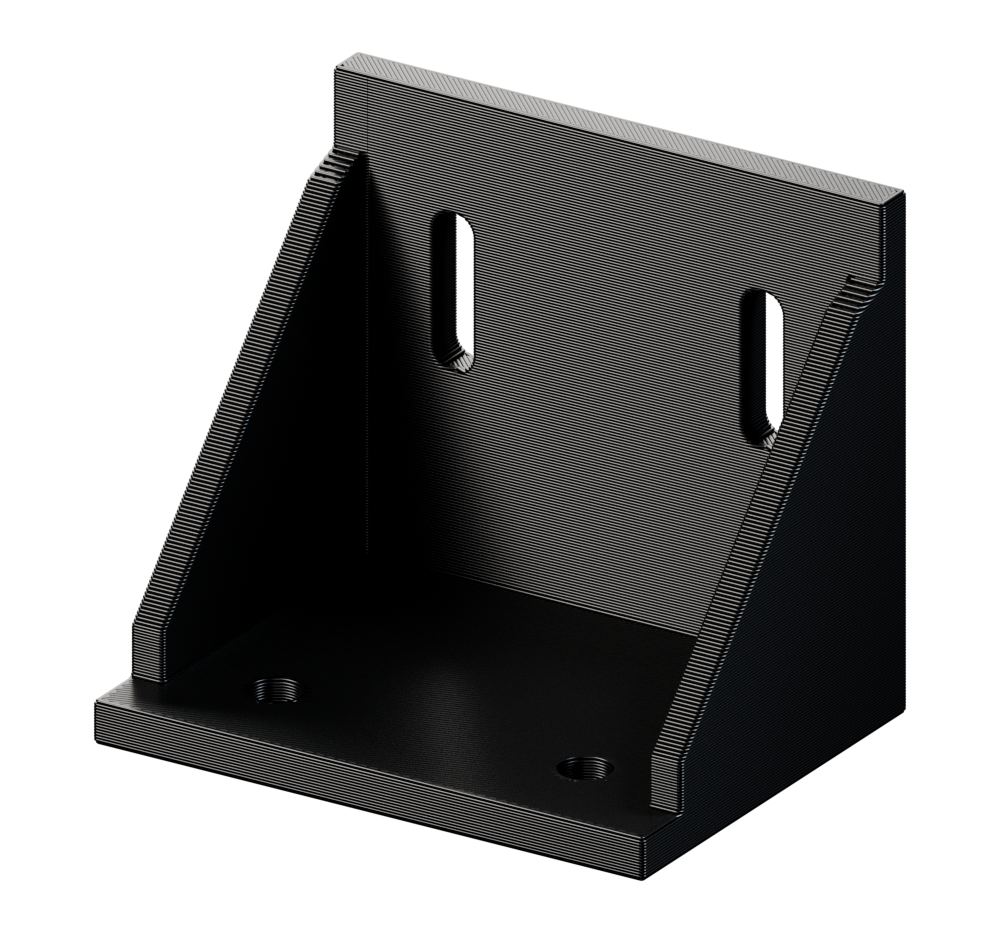
Begin with a non-sensitive description of the component and intended use. Discuss any restrictions or handling requirements with us before sharing files, then provide the agreed design and project brief.
We discuss material, geometry, preparation and finishing. Define the checks needed for the first sample and resolve fit or handling changes before treating the design as a repeat item.
Confirm the revision and manufacturing setup for recurring orders. Review later changes deliberately, including any new environment, connection detail or documentation requirement.
Keep recurring equipment parts recognisable to engineering, maintenance and purchasing. A clear name and reference make it easier to find a replacement mount or another set of workshop contact parts. AM Pilot's Digital Inventory in the GAGAT AM customer portal can retain the approved model, material, applicable print settings, finishing and agreed pricing during its approval period.
For suitable agreed projects, select an available approved item and quantity online, with our in-house team preparing the next batch. If the interface or working conditions change, request a review before ordering the saved item again. Discuss project-specific access and file-handling requirements with us before sharing restricted information or setting up that parts library.
Explore Digital InventoryIdentify the agreed workshop or handling use, the equipment interface and the accepted model revision.
Record grip, retention, connector access and how the item is installed or removed with the intended equipment.
Select the approved support item and quantity. Review any changed use or handling requirement before repeating it.
This page describes prototyping and support-equipment manufacturing services. It does not claim a blanket defence qualification, programme approval or suitability for every application. Share the intended use and required evidence so we can determine whether the work fits our capabilities.
Start with a non-sensitive description, approximate dimensions, quantity and the purpose of the part. If files have access or handling restrictions, discuss those requirements before uploading them. We can then agree the information needed to evaluate the manufacturing request.
Yes, we can quote an appropriate initial quantity for evaluating an agreed design. The material, finishing and checks should reflect what the trial needs to establish. A successful prototype is followed by a deliberate acceptance decision before recurring production.
Sometimes a polymer tool is worth evaluating, but it should not be treated as a direct substitute without review. Loads, stiffness, wear, temperature and fastening can change the result. Share the task and existing constraints so we can discuss a suitable trial approach.
Tell us what the part needs to do, how many you need and which requirements matter. We will help assess the manufacturing route and prepare a quotation for the agreed scope.